Short answer
Metabolic bone disease (MBD) weakens a crested gecko's bones when it gets too little calcium or vitamin D3. Watch for a wavy tail, a soft jaw, curved legs, weakness, lethargy and a poor appetite. A reptile vet confirms it, usually with X-rays. It is easy to prevent: feed a complete crested gecko diet, dust insects with calcium, and consider a gentle UVB lamp. Breeding females need extra care: check their calcium sacs.
What metabolic bone disease is
Metabolic bone disease, or MBD, is a weakening of the bones caused by problems with calcium. Vets also call it nutritional secondary hyperparathyroidism.5 It is diagnosed most often in lizards and turtles, and its early signs are easy to miss.6
What causes it in crested geckos
ReptiFiles names the cause in crested geckos as a lack of calcium or vitamin D3.1 In practice that usually means:
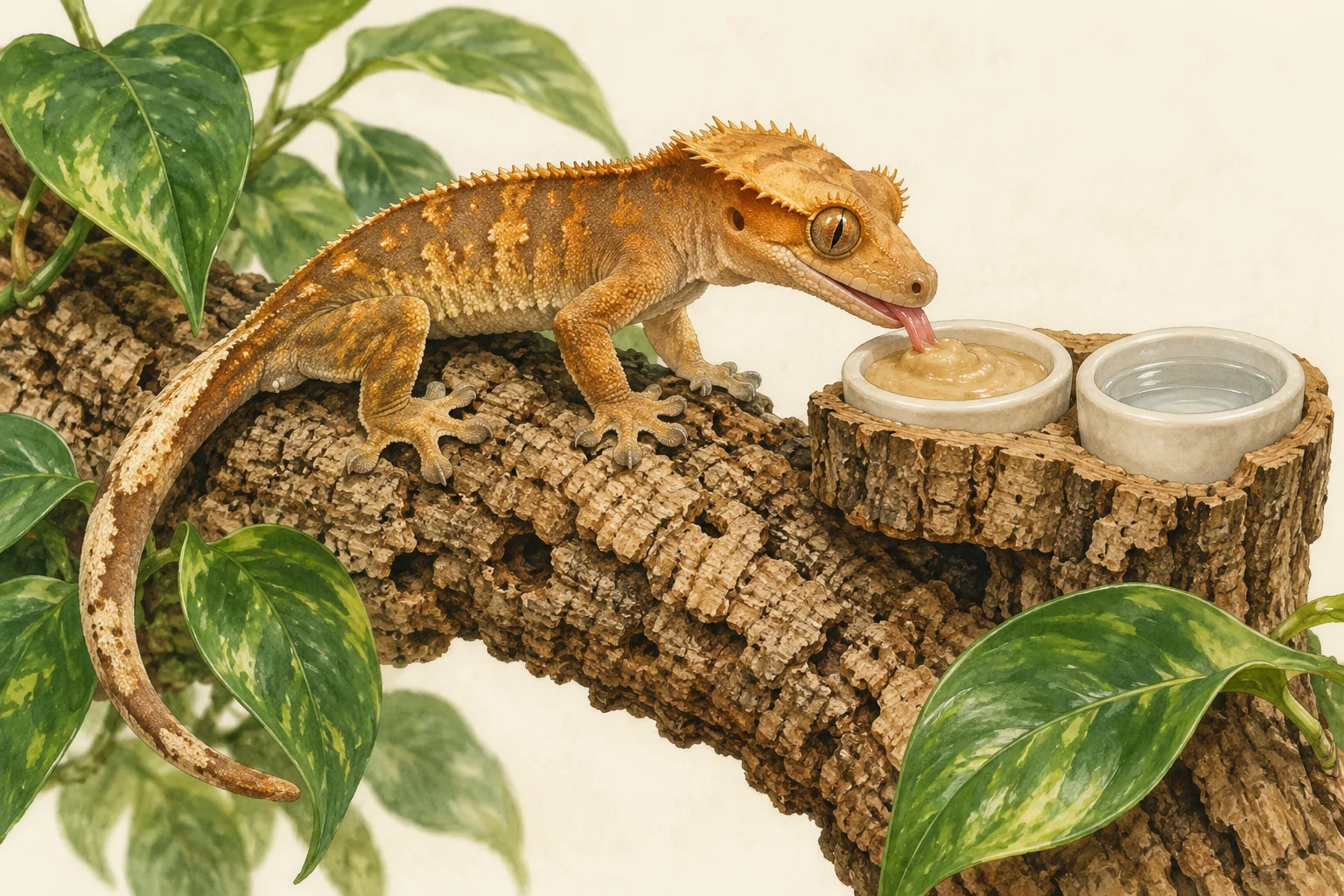
- Not enough calcium in the diet. ReptiFiles’ prevention advice is a complete powdered diet and calcium-dusted insects,17 which points to the usual gaps: a diet built on fruit, or insects fed without calcium.
- No vitamin D3 source, from either UVB light or the diet. The RSPCA explains that UVB lets reptiles make vitamin D3, which they need to store and use calcium.3
- Breeding. Pangea checks breeding females’ calcium sacs monthly and adds calcium if the sacs are small or absent.2
- A calcium to phosphorus imbalance in the diet.56
Signs to watch for
| Type of sign | What you may see |
|---|---|
| Behavior and appetite | Lethargy, loss of appetite, weight loss16 |
| Body changes | A wavy tail, a soft jaw, curved or swollen limbs15 |
| Movement | Weakness, reluctance to move5 |
| Severe signs | Fractures, a bent spine, twitching or seizures56 |
Crested geckos climb and jump, so a gecko that keeps falling, cannot hold on to the glass, or stays on the floor deserves a closer look.
Checking calcium sacs
Crested geckos store calcium in sacs that show as white patches on the roof of the mouth. ReptiFiles suggests checking them periodically.1 Pangea checks breeding females once a month.2 Ask your vet to show you how to open the mouth safely; forcing it can cause injury.
How a vet diagnoses and treats it
A vet will review the diet and setup, examine the gecko and usually take X-rays to confirm the diagnosis and look for fractures. Blood calcium and phosphorus levels can also help.56
Treatment depends on severity and can include corrected diet, calcium supplements given as the vet directs, UVB, strict rest in a small space with careful handling, and pain relief for fractures.56 Some cases can be reversed, but treatment can take weeks to months, and severe cases are hard to treat.6 If MBD is caught too late, the gecko can be left with permanent deformities, and it can be fatal.3
ReptiFiles says increasing calcium with vitamin D3, and adding UVB, will improve minor cases, and recommends a vet for severe cases or cases that do not improve within a couple of weeks.1 We suggest seeing a vet as soon as you notice the signs, so the cause is confirmed before you change supplements.
Prevention
ReptiFiles calls MBD particularly easy to prevent in crested geckos.1
- Feed a complete crested gecko diet as the base, such as Pangea or Repashy.17
- Dust all insects with calcium. Use calcium without vitamin D3 if you run UVB, and calcium with D3 if you do not.7
- Keep fruit as a treat, not a staple.7
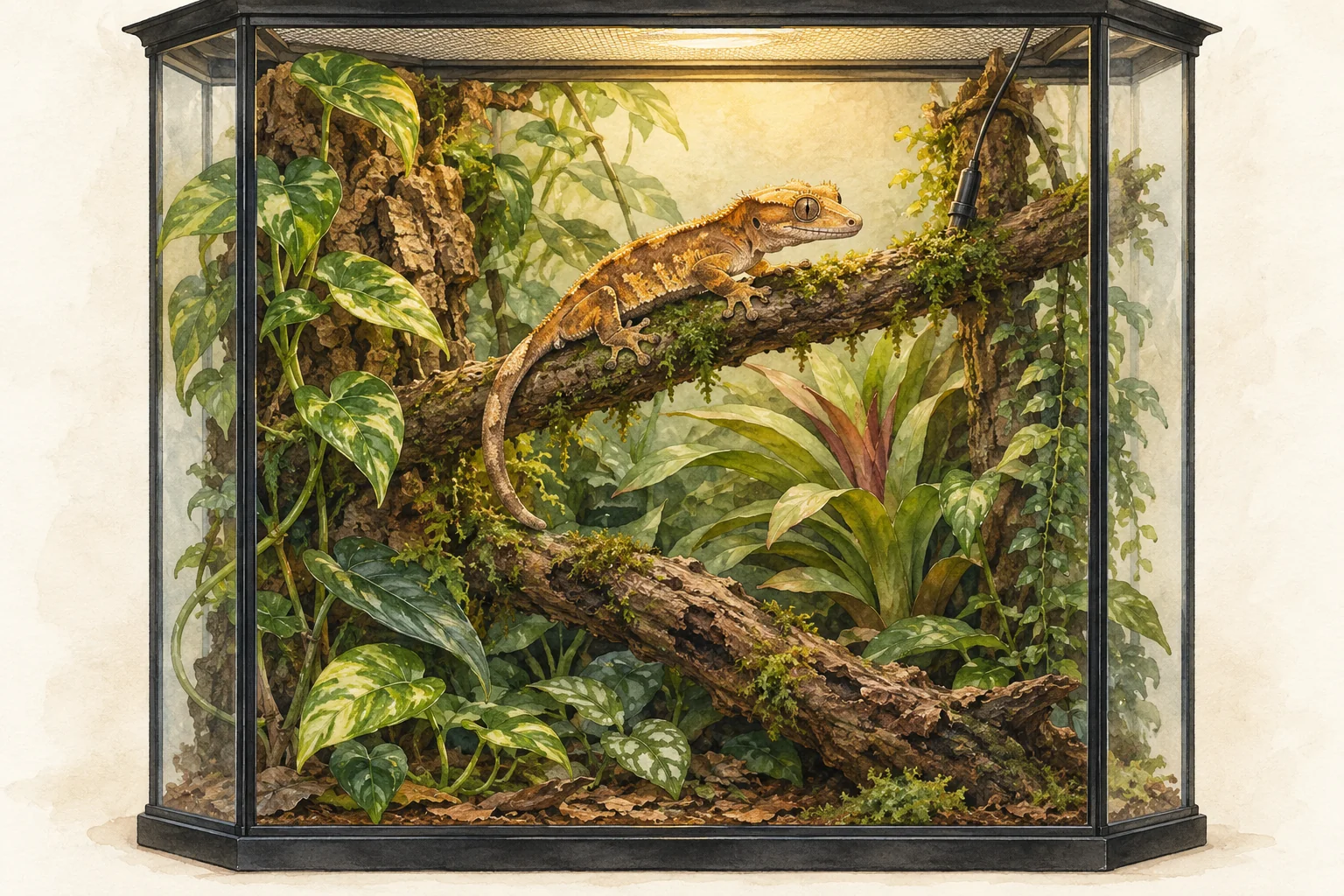
- Consider a gentle UVB lamp. ReptiFiles suggests a 5% UVB bulb; the RSPCA a medium-output 5–7% lamp.13
- Watch breeding females closely, and check their calcium sacs.2
- Book a yearly vet check.4
Common questions
What are calcium sacs?
Crested geckos store calcium in sacs that show as white patches on the roof of the mouth. ReptiFiles suggests checking them periodically, and Pangea checks breeding females monthly. Small or missing sacs in a breeding female mean she needs more calcium. Ask a vet or experienced keeper to show you how to look safely.
Is a wavy tail always MBD?
ReptiFiles lists a wavy tail among the signs of MBD in crested geckos. A tail that flops over the body while the gecko hangs on the glass is a different problem, usually called floppy tail syndrome. Either way, a vet should check it.
Do crested geckos need UVB to avoid MBD?
Not strictly, if they eat a complete diet with vitamin D3. Pangea says UVB is unnecessary for crested geckos. The RVC recommends a low-output lamp (about 6%) and the RSPCA a medium-output 5–7% lamp, and the RSPCA says that with a good UV setup you will not need to add vitamin D3. ReptiFiles strongly suggests adding UVB if a crested gecko already has MBD.
Sources
Numbers in the text link to these sources. We checked each one on the date shown.
- 1Crested Gecko Metabolic Bone Disease (MBD)Mariah Healey. ReptiFiles. Checked Oct 29, 2026.
- 2Crested Gecko CarePangea Reptile (diet maker and breeder). Checked Oct 29, 2026.
- 3Caring for your Crested GeckoRSPCA. Checked Oct 29, 2026.
- 4Crested gecko care (reviewed December 2024)RVC Exotics Service, Royal Veterinary College. Checked Oct 29, 2026.
- 5Metabolic Bone Disease (MBD) in Reptiles and Amphibians, client handoutLafeberVet. Checked Oct 29, 2026.
- 6Metabolic Bone DiseaseUnusual Pet Vets. Checked Oct 29, 2026.
- 7Crested Gecko FoodReptiFiles. Checked Oct 29, 2026.
Update history
- : First published.
- : Re-checked every claim against its sources; corrected wording, numbers and attributions.
HerpWise Editorial · About the author and review process
HerpWise Editorial summarizes published veterinary, welfare and specialist care guidance. The sources and check date are listed on each guide. Veterinary review is credited separately when completed.
Suggest a correction to this guide