Short answer
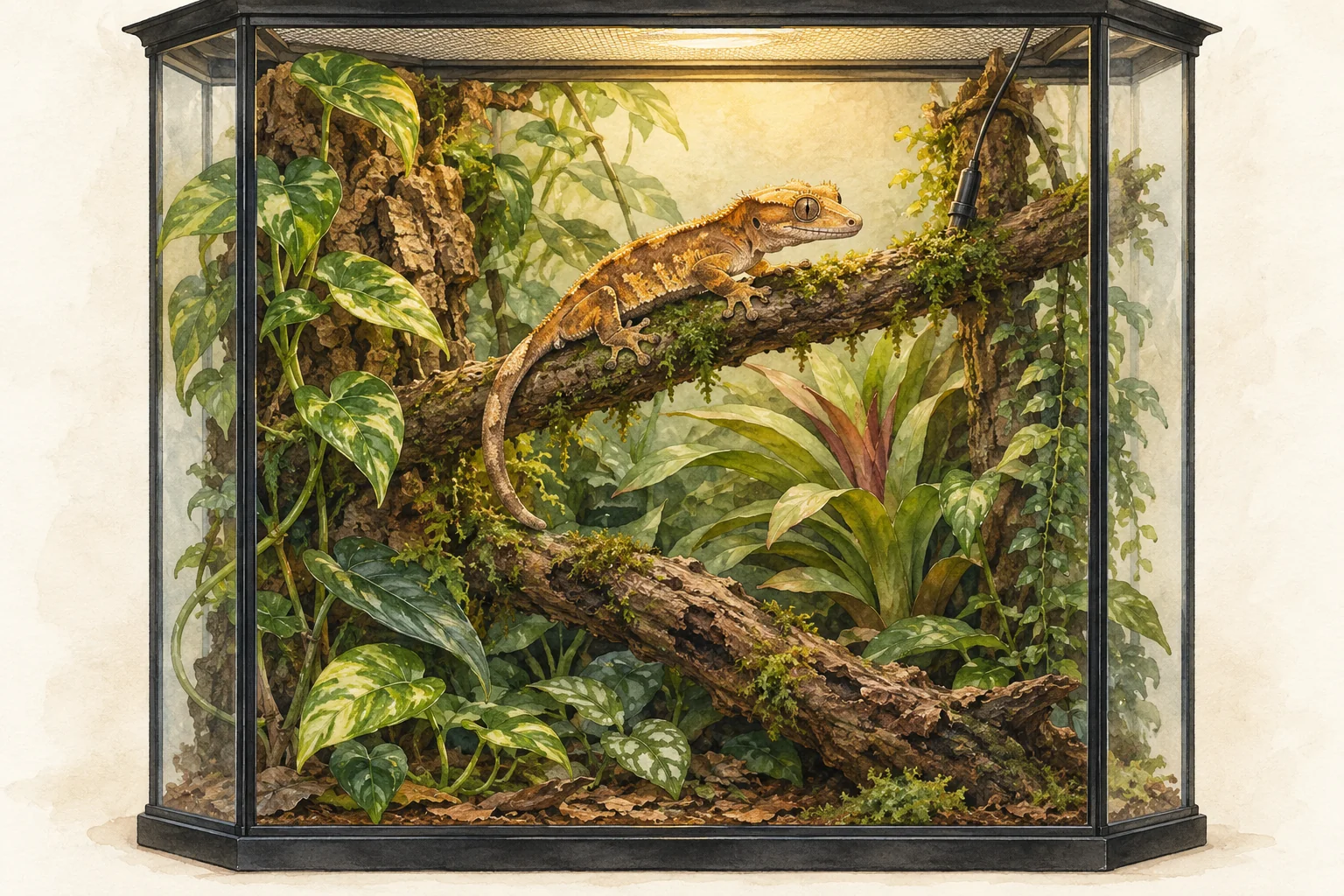
Provide a modest warm area and a cooler retreat, measured where your gecko spends time. The RSPCA gives 79–82°F for the basking zone and 68–75°F at the cool end. ReptiFiles gives a warmer basking range of 82–85°F. Do not heat the whole enclosure to the warmest number: use a thermostat, check the gradient and make sure the gecko can move into shade.
Read each number in context
A warm branch, a shaded lower area and the room around the terrarium can have different temperatures. Compare the same zone when reading different guides.
| Source | Warm area | Cool area | Night |
|---|---|---|---|
| RSPCA | 79–82°F (26–28°C) | 68–75°F (20–24°C) | 64–68°F (18–20°C) |
| ReptiFiles | 82–85°F (28–29°C) | 70–75°F (21–24°C) | 65–72°F (18–22°C) |
The table rounds the RSPCA’s Celsius values to Fahrenheit and retains ReptiFiles’ stated ranges.12
Where the sources differ
Pangea describes an overall range of 70–78°F for most of the year and warns of stress at 82°F or warmer.3 That is more conservative than ReptiFiles’ basking-zone recommendation. Avoid turning the highest number in any source into a whole-tank setting. Discuss a suitable setup with a reptile veterinarian if your animal has health concerns.
Measure before adjusting equipment
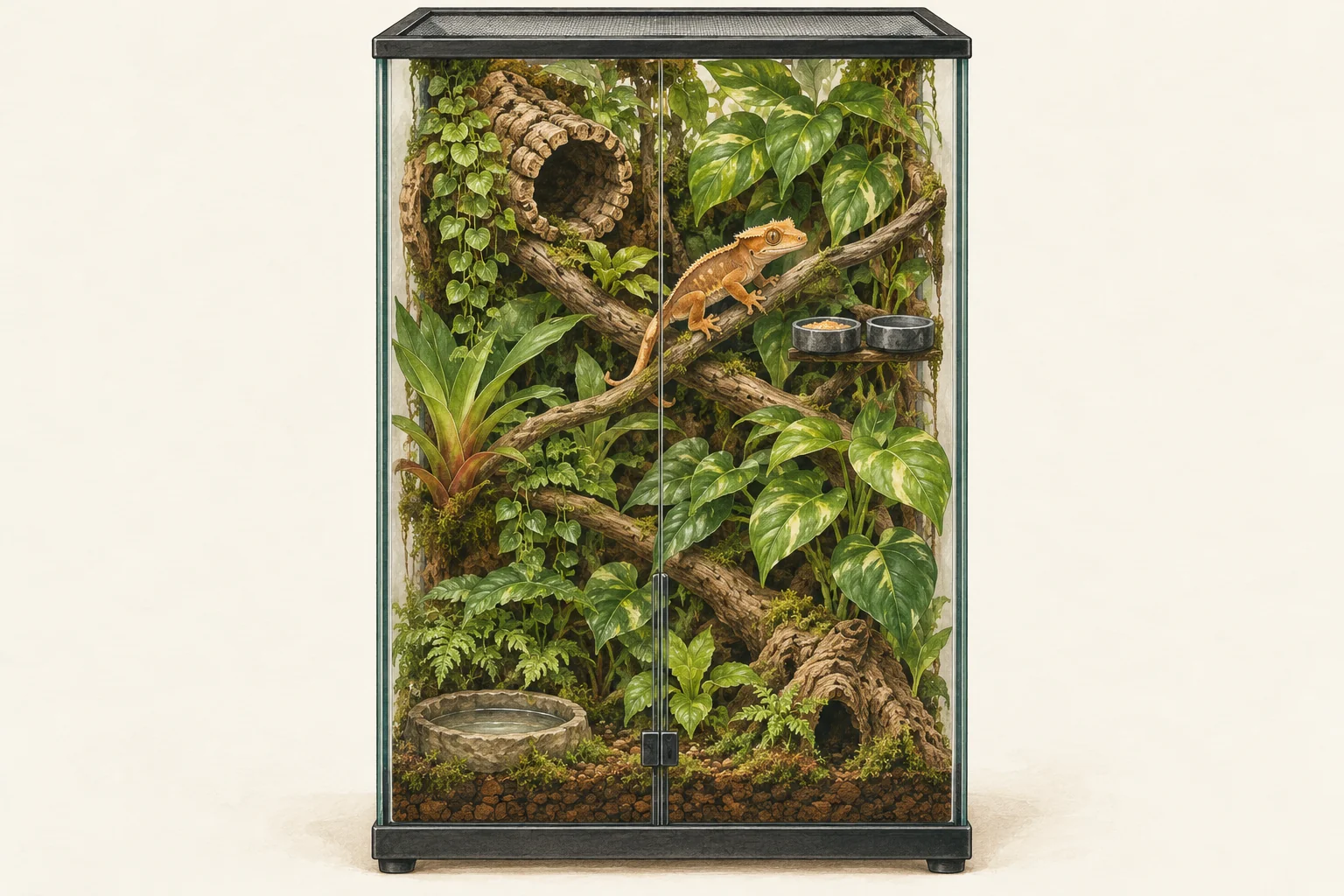
The RSPCA calls for a thermostat on heat sources and separate digital thermometers at the warm and cool ends, checked daily.1 Use readings from the occupied parts of the enclosure rather than the thermostat setting alone.
Keep a simple record of the warm area, the cooler retreat and the room conditions. After moving equipment, check both zones again. If the warm area improves while the retreat also becomes too warm, the adjustment has not created a useful gradient.
Keep a daytime and nighttime plan
ReptiFiles advises against colored night bulbs.2 The RSPCA also calls for darkness at night, with a non-light-emitting controlled heat source if nighttime warmth is needed.1
Review the setup when the room conditions change, especially during hot weather. If the animal remains unusually lethargic or stops eating, use the not-eating checklist and contact a reptile veterinarian rather than assuming the temperature is the only cause.
Common questions
Does a crested gecko need a heat lamp?
Base the decision on measurements in your enclosure. A cool room may need controlled heat; a warm room may not. Any heat source should have a thermostat and leave a cooler retreat.
Can I use one temperature reading for the whole enclosure?
No. Check both the warm area and the cooler retreat. A single reading can hide an excessively hot branch or a cool zone that is not actually cool.
Sources
Numbers in the text link to these sources. We checked each one on the date shown.
- 1Caring for your Crested GeckoRSPCA. Checked Oct 30, 2026.
- 2Crested Gecko Lighting, Temperature & Humidity RequirementsReptiFiles (specialist keeper guidance). Checked Oct 30, 2026.
- 3Crested Gecko CarePangea Reptile (diet maker and breeder). Checked Oct 30, 2026.
Update history
- : First published; separated basking-zone targets from whole-enclosure temperatures.
HerpWise Editorial · About the author and review process
HerpWise Editorial summarizes published veterinary, welfare and specialist care guidance. The sources and check date are listed on each guide. Veterinary review is credited separately when completed.
Suggest a correction to this guide