Short answer
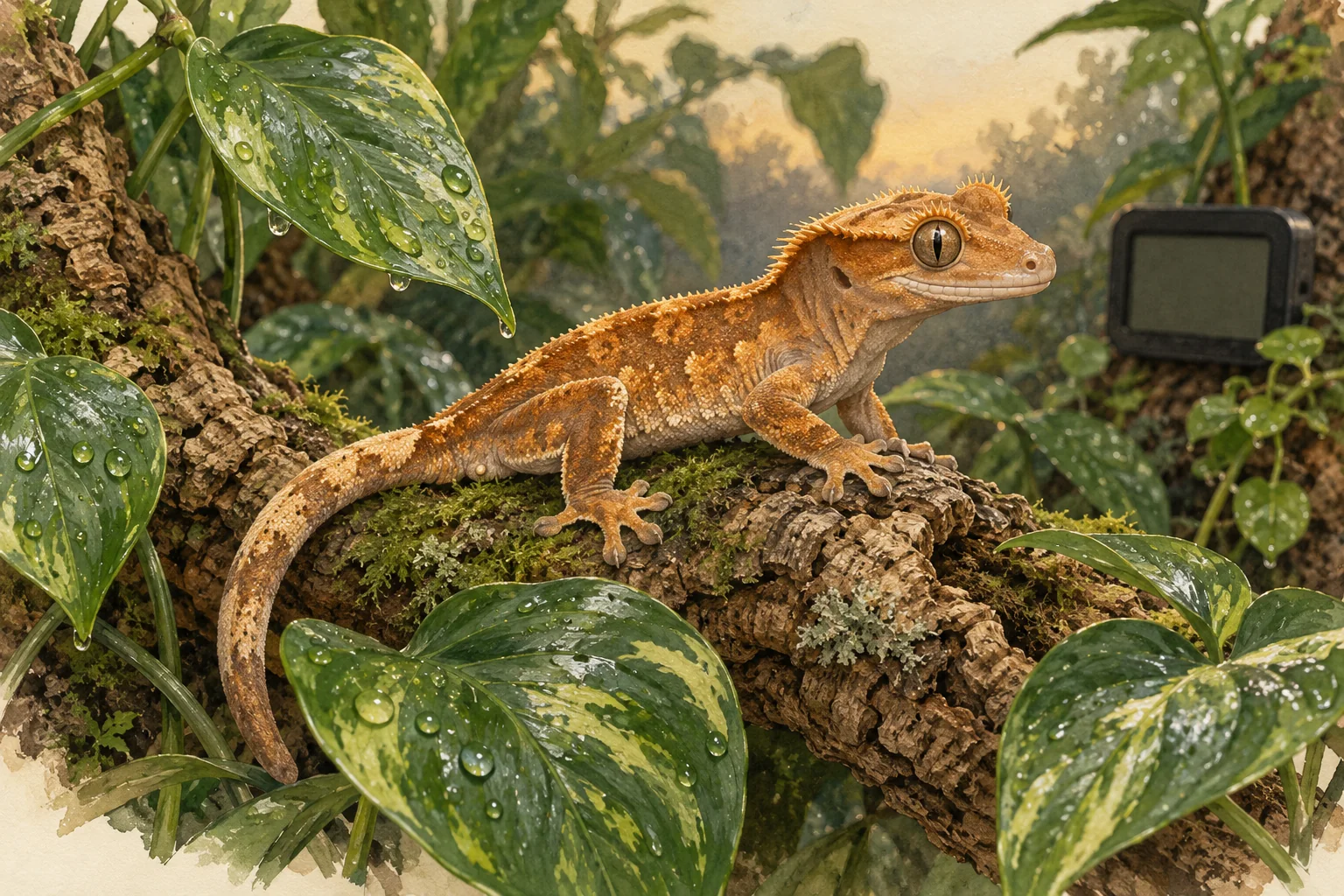
Aim for a humid period after misting followed by a dry-out, rather than keeping the enclosure constantly wet. Published ranges differ: the RSPCA describes 40–50% normally with boosts up to 80%; ReptiFiles describes 60–80% followed by drying to around 40–50%. Measure your own enclosure and adjust spraying and ventilation to produce that changing pattern.
Compare a daily cycle, not a single reading
The RSPCA describes a normal humidity of 40–50% and temporary boosts up to 80% after spraying.1 ReptiFiles describes a 60–80% humid period, then drying to approximately 40–50% before the next mist.2 Pangea gives a higher post-misting peak but also emphasizes drying between sprays.3
A reading taken just after spraying answers a different question from one taken before the next spray. Record which part of the cycle you are observing.
Build a useful observation routine
Use a hygrometer, as the care sources recommend.12 To understand your enclosure, write down:
- The reading before spraying.
- The reading after the mist has settled.
- Whether the reading falls later in the day.
- Whether leaves and exposed surfaces dry between sprays.
This log helps you change one part of the setup at a time. A fixed spraying schedule copied from another home may behave differently in your room.
Adjust the pattern
ReptiFiles suggests evening misting, with an additional morning spray when needed.2 If the enclosure remains wet, examine ventilation and the amount of water being added before automatically spraying again. The RSPCA warns against waterlogged substrate, and Pangea warns about an enclosure that stays wet and humid.13
If the enclosure dries unusually fast, check its temperature and the position of the hygrometer, then reassess the whole cycle. The aim is a repeatable moisture pattern with ventilation, rather than chasing a peak number.
Keep drinking water available
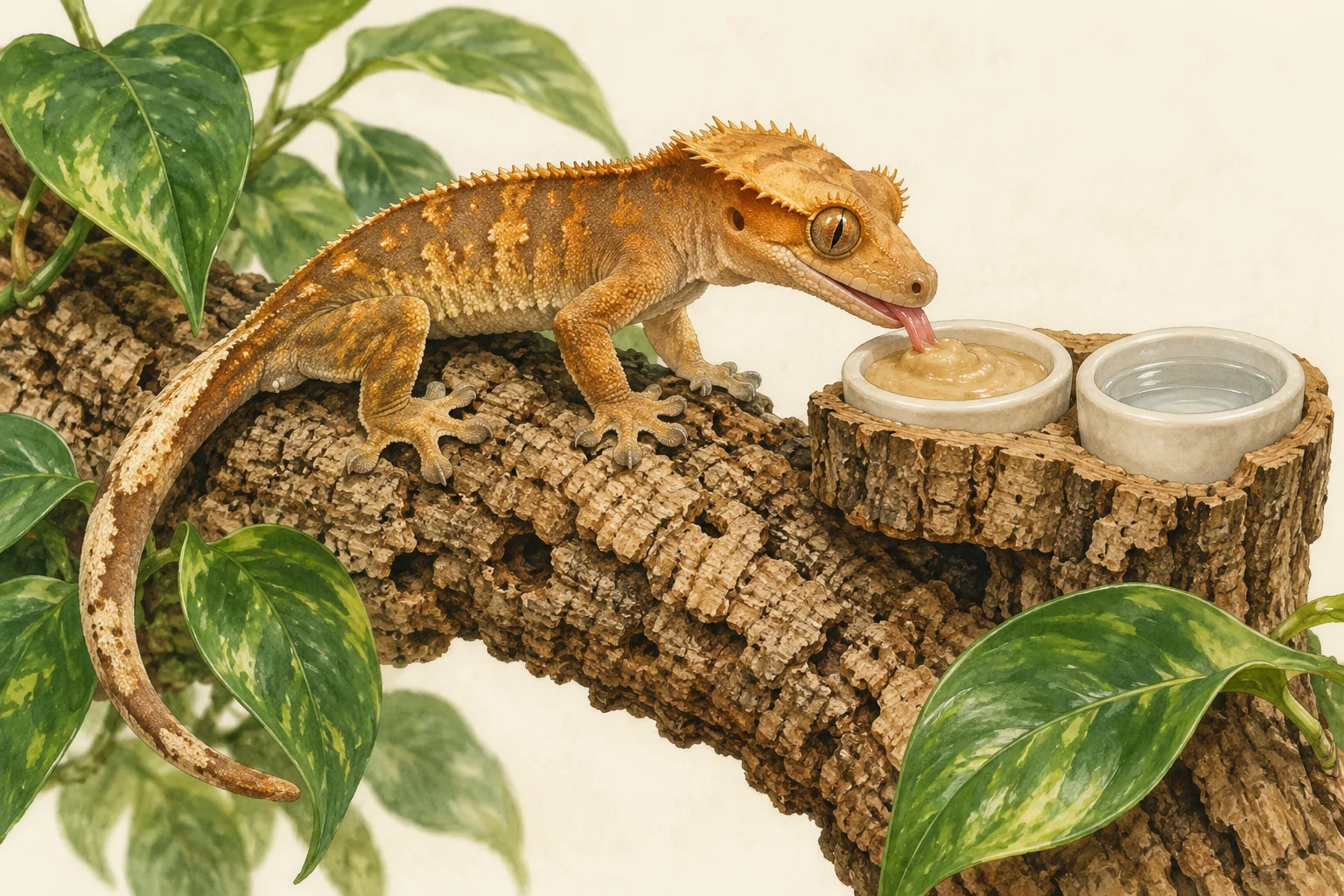
ReptiFiles notes the importance of droplets for drinking, while the RSPCA still requires a dish of fresh water.21 Use clean water and check the dish separately from the misting routine.
Persistent shedding problems or changes in appetite need more than another spray. Review the full care guide and seek a reptile veterinarian’s advice when the animal is unwell.
Common questions
Should humidity stay at 80% all day?
The sources describe a rise after misting and a fall before the next spray. Constant wetness is not the goal. Check the enclosure through the day instead of relying only on the reading immediately after misting.
Does misting replace a water dish?
No. Droplets provide a drinking opportunity, but a dish of clean fresh water should still be available.
Sources
Numbers in the text link to these sources. We checked each one on the date shown.
- 1Caring for your Crested GeckoRSPCA. Checked Oct 30, 2026.
- 2Crested Gecko Lighting, Temperature & Humidity RequirementsReptiFiles (specialist keeper guidance). Checked Oct 30, 2026.
- 3Crested Gecko CarePangea Reptile (diet maker and breeder). Checked Oct 30, 2026.
Update history
- : First published; distinguished post-misting peaks from the dry-out period.
HerpWise Editorial · About the author and review process
HerpWise Editorial summarizes published veterinary, welfare and specialist care guidance. The sources and check date are listed on each guide. Veterinary review is credited separately when completed.
Suggest a correction to this guide