Short answer
Adult female bearded dragons often produce eggs even if they have never met a male. Before laying, a female may pace, dig, eat less and look swollen. Give her a lay box of damp, diggable sand or soil deep enough to hold a tunnel. A healthy gravid female stays bright and alert. If she is weak, lethargic or unresponsive instead, she may be egg-bound, which can be life-threatening and needs a vet.
Eggs without a male are normal
The RSPCA says it is quite common for female bearded dragons to develop eggs even if they have never been with a male.1 ReptiFiles compares it to chickens laying unfertilized eggs.3 VCA notes that most pet reptiles brought to vets for egg-binding are single females that have never met a male.2
Signs she is getting ready to lay
ReptiFiles lists:3
- Frantic pacing
- Digging
- A swollen belly
- Eating less
- Irritability
VCA adds that a healthy gravid reptile may not want to eat, but should still be bright, active and alert.2
Setting up a lay box
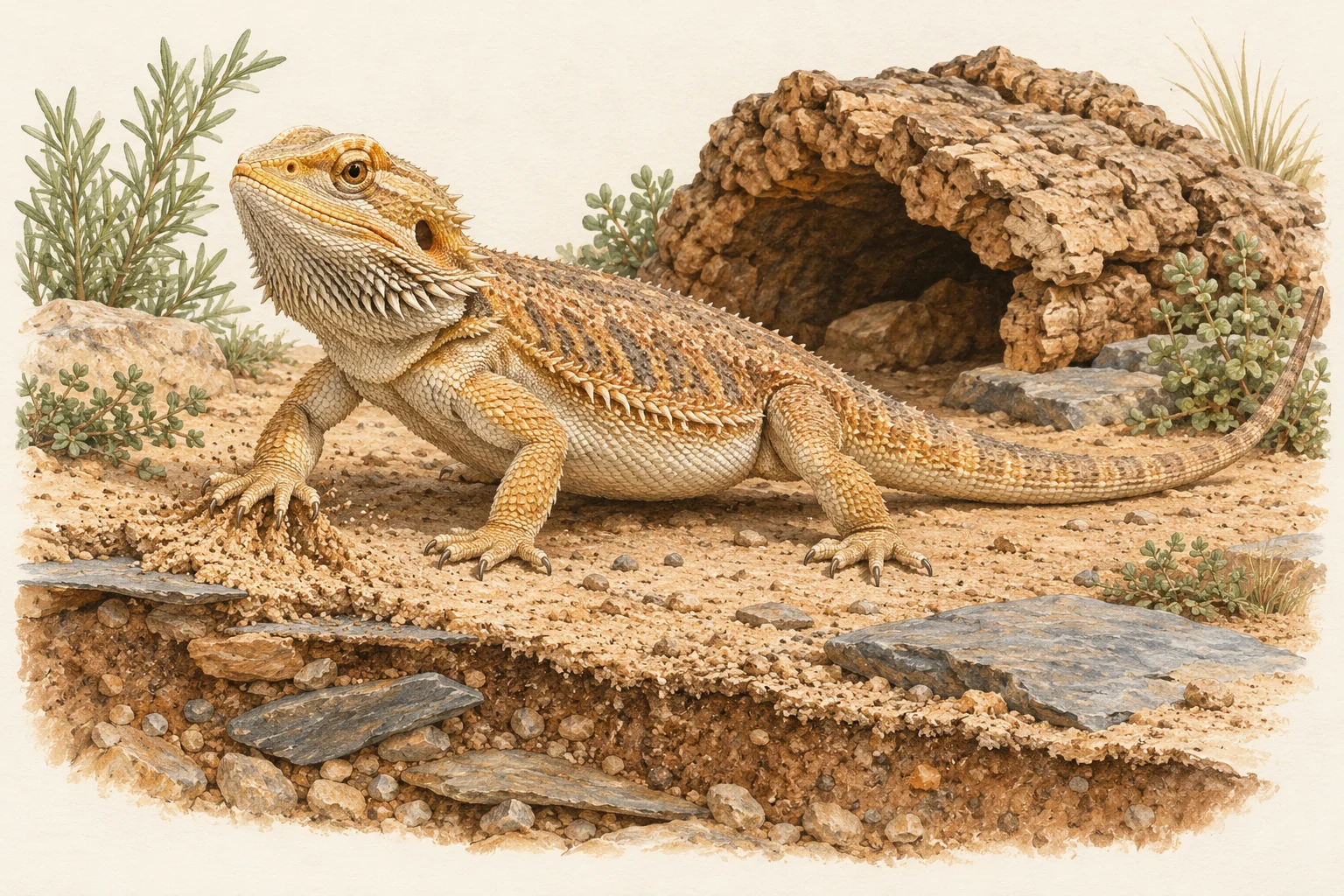
The RSPCA’s advice is to give her a digging box. Without one, she may become egg-bound.1 ReptiFiles describes its setup:3
- A plastic tub filled with about 6 inches of damp play sand
- Sand wetted with warm water until it clumps, so tunnels hold their shape
- A heat lamp or ceramic heat emitter over the box
- Somewhere quiet, since some females do better left alone. ReptiFiles says not to move her or the eggs until she has finished filling the hole.3
ReptiFiles describes a female who will not settle and runs from room to room as one looking for a place to lay, and the right moment to offer the box.3
After she lays
- Let her finish. Do not remove her or the eggs until she has refilled the hole.3
- Let her rest. ReptiFiles stresses that laying is exhausting, the equivalent of giving birth.3 ReptiFiles suggests a warm bath to rehydrate her and rinse off the sand, at least an hour of basking before bed, and insects generously dusted with calcium alongside her greens every day for the next 3 days.3
- Remove the eggs, and freeze them before disposal if there is any chance they are fertile.1
- Supplements. Some females lay very often, which places a heavy load on calcium and energy reserves. The RSPCA says these females need careful supplement use.1 Ask your vet for a plan.
Egg-binding (dystocia)
Egg-binding means a female cannot pass her eggs. It is relatively common in reptiles and can be life-threatening.2
Causes are often linked to husbandry: the wrong temperatures, too little UVB, the wrong humidity, no suitable nest site, a diet low in calcium or protein, and dehydration. Age, poor muscle tone, injuries, infections, constipation and abnormal eggs can also contribute.2
Signs of a female in trouble: she is not eating, is weak, may have a swollen belly, and can become severely lethargic or unresponsive if not treated early.2
Treatment needs a vet, who will examine her and usually take blood tests and X-rays. Treatment may include fluids, calcium and hormone injections, and creating a nest site at home; if that fails, surgery may be needed.2
Common questions
How many eggs does a bearded dragon lay?
VCA says bearded dragons normally produce between 20 and 40 eggs. ReptiFiles says a female will deposit between 15 and 30 eggs in a clutch.
What should I do with infertile eggs?
The RSPCA says to remove any eggs you find. If there is any chance they are fertile, freeze them before disposal.
Can I stop my female producing eggs?
VCA notes that for single females, a vet may suggest surgery to remove the ovaries and oviducts, similar to spaying a dog or cat, which prevents future egg-binding. Discuss it with a reptile vet.
Sources
Numbers in the text link to these sources. We checked each one on the date shown.
- 1Caring for your bearded dragonRSPCA. Checked Oct 29, 2026.
- 2Reptiles: DystociaGregory Rich, DVM; Rick Axelson, DVM. VCA Animal Hospitals. Checked Oct 29, 2026.
- 3Bearded Dragon Egg LayingReptiFiles. Checked Oct 29, 2026.
Update history
- : First published.
- : Re-checked every claim against its sources; corrected wording, numbers and attributions.
HerpWise Editorial · About the author and review process
HerpWise Editorial summarizes published veterinary, welfare and specialist care guidance. The sources and check date are listed on each guide. Veterinary review is credited separately when completed.
Suggest a correction to this guide