Short answer
Metabolic bone disease (MBD) is a weakening of the bones caused mainly by too little UVB, calcium or vitamin D3. Early signs are muscle twitching, tremors, weakness and a poor appetite; later come swollen legs, a soft or swollen jaw, fractures and a bent spine or tail. A reptile vet diagnoses it, usually with X-rays. Mild cases can improve once UVB, heat and diet are fixed, but bone damage can be permanent, so prevention matters most.
What metabolic bone disease is
Metabolic bone disease, or MBD, is a common condition that affects a reptile’s bones. Vets also call it nutritional secondary hyperparathyroidism.3 It is one of the most common problems in captive reptiles, and it is seen most often in lizards and turtles.14
What causes it
A bearded dragon needs UVB light to make vitamin D3 in its skin, and vitamin D3 to absorb calcium from its food.2 MBD develops when that chain breaks:
- Too little UVB. This is the most common cause, according to the RSPCA.1 ReptiFiles says it is seen most often in dragons with weak or no UVB.5
- Too little calcium, or too much phosphorus compared with calcium.34
- A basking spot that is too cool. A dragon that cannot get warm enough cannot make vitamin D3 from UVB efficiently.5
- Too much vitamin D3 from supplements can also cause it.5
Common mistakes behind these causes include a UVB lamp behind glass or plastic, an old lamp, and a lamp mounted too far away through mesh.2 Another is a diet heavy in oxalate-rich greens such as spinach.56 See our lighting guide and food list.
Signs to watch for
Early signs are often subtle, so MBD is frequently not noticed until it is advanced.4
| Type of sign | What you may see |
|---|---|
| Behavior and appetite | Muscle twitching, tremors, jerky movements, lethargy, poor appetite, weight loss145 |
| Body changes | Swollen legs, a soft or swollen lower jaw, bumps along the bones, reluctance to move135 |
| Severe signs | Fractures, seizures, a bent spine, and permanently deformed limbs, jaw, spine or tail1345 |
How a vet diagnoses it
A vet will ask about the diet and setup, examine the dragon, and usually take X-rays to confirm the diagnosis, check for fractures and track recovery.3 Blood tests for calcium and phosphorus can also help.34
Bring photos of your setup, the make and age of your UVB lamp, and the names of your supplements.
How it is treated
Treatment depends on how severe the disease is.4 Vet sources list:
- Fixing the setup: the right UVB lamp at the right distance, correct basking temperatures, and a corrected diet.345
- Calcium supplements given as the vet directs.34
- Supervised time in unfiltered sunlight, with shade available.34
- Strict rest in a small space to protect fragile bones, with very careful handling.3
- Pain relief for fractures, and in some cases hospital care or surgery.34
Mild cases may resolve with husbandry and diet changes, but treatment can take weeks to months.4 ReptiFiles stresses that severe MBD can kill, and that structural damage to the body is permanent.5
Where the sources disagree. ReptiFiles says mild cases can be treated by improving the diet, dusting insects with a calcium supplement that contains vitamin D3, and fixing UVB and heat, with a vet visit if that does not help.5 The LafeberVet handout lists calcium that is free of vitamin D and phosphorus, given as a vet directs.3 Because too much vitamin D3 also causes problems,56 ask a vet before you change supplements for a dragon that may have MBD.
Prevention
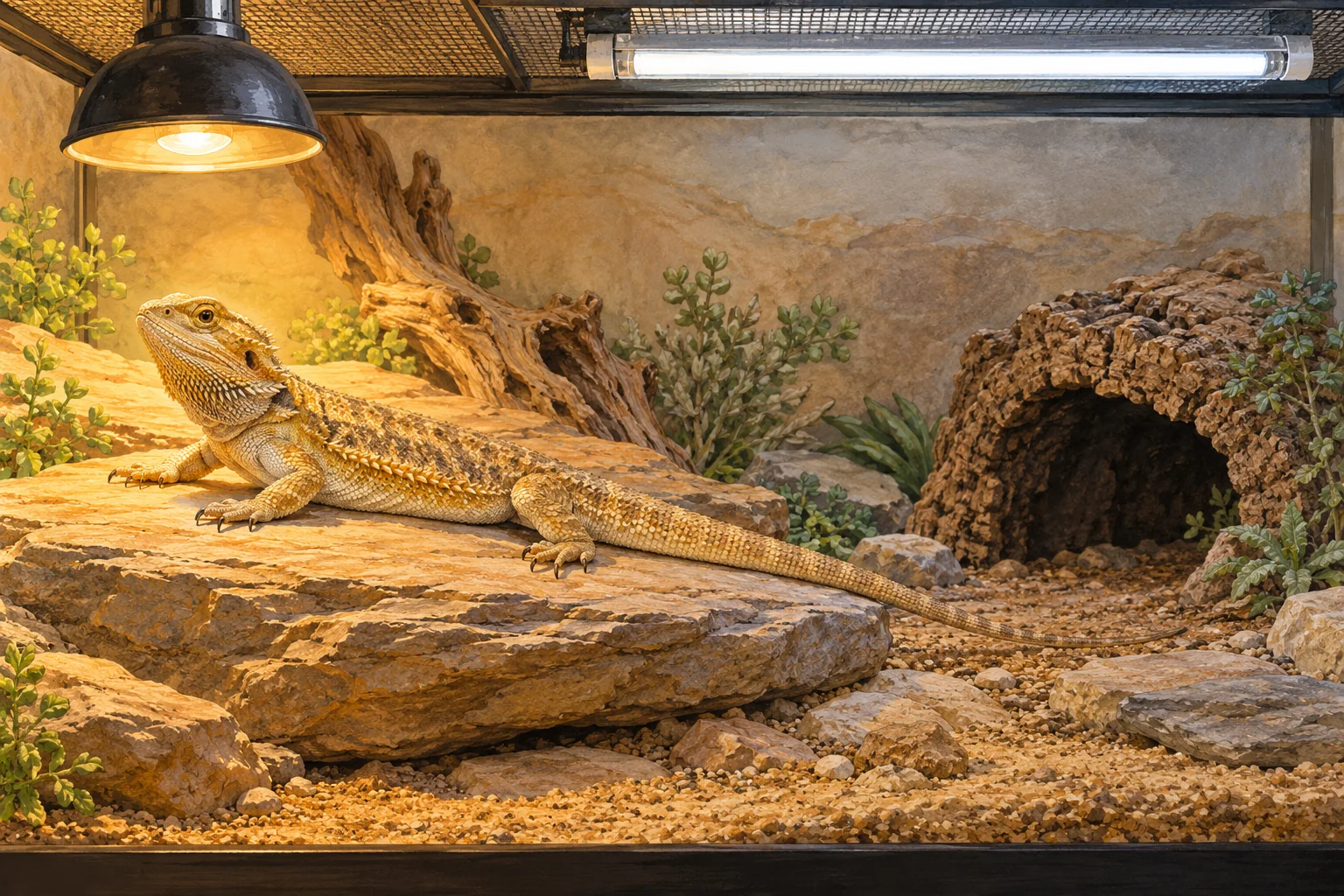
- UVB: a T5 high-output UVB tube in the right fixture,5 with no glass, plastic or screen in the way, replaced every six months or as the maker directs.2
- Heat: a basking spot hot enough that your dragon can warm up fully, with the heat lamp overlapping the middle of the UVB lamp.5
- Calcium: VCA suggests lightly sprinkling food with a phosphorus-free calcium powder daily, or with a calcium powder that contains vitamin D3 two to three times a week.6 Ask your vet which suits your dragon.
- Diet: more plants as your dragon grows up, mostly leafy greens within the plant part, and few high-oxalate greens such as spinach.65
- Checkups: regular vet checks help catch problems early.4
Common questions
Can metabolic bone disease be cured?
Some signs can be reversed with treatment, especially in mild cases caught early. Treatment can take weeks to months. Severe cases are hard to manage, and bone deformities that have already formed are usually permanent.
Can too much calcium or vitamin D3 cause problems too?
Yes. ReptiFiles notes that a vitamin D3 overdose can also cause MBD, and VCA warns that supplement mistakes, especially with vitamin D3, are common. Follow the product label and ask your vet.
Can sunlight help a bearded dragon with MBD?
Unfiltered natural sunlight is part of treatment in the vet sources, but it must be supervised, with shade available, and never through window glass, which blocks UVB.
Is MBD painful?
It can be. Fractures are part of the disease, and vets list pain relief among the treatments. Handle a dragon with suspected MBD very gently and get it to a vet.
Sources
Numbers in the text link to these sources. We checked each one on the date shown.
- 1Caring for your bearded dragonRSPCA. Checked Oct 29, 2026.
- 2Bearded Dragons: HousingGregory Rich, DVM; Laurie Hess, DVM; Rick Axelson, DVM. VCA Animal Hospitals. Checked Oct 29, 2026.
- 3Metabolic Bone Disease (MBD) in Reptiles and Amphibians, client handoutLafeberVet. Checked Oct 29, 2026.
- 4Metabolic Bone DiseaseUnusual Pet Vets. Checked Oct 29, 2026.
- 5Bearded Dragon Metabolic Bone Disease (MBD)Mariah Healey. ReptiFiles. Checked Oct 29, 2026.
- 6Bearded Dragons: FeedingGregory Rich, DVM; Laurie Hess, DVM; Rick Axelson, DVM. VCA Animal Hospitals. Checked Oct 29, 2026.
Update history
- : First published.
- : Re-checked every claim against its sources; corrected wording, numbers and attributions.
HerpWise Editorial · About the author and review process
HerpWise Editorial summarizes published veterinary, welfare and specialist care guidance. The sources and check date are listed on each guide. Veterinary review is credited separately when completed.
Suggest a correction to this guide