Short answer
A healthy dropping is a firm brown log with a white or off-white urate at one end. Babies may go one to three times a day; adults anywhere from once to seven times a week. Runny, foul-smelling or greenish poop, blood, a non-white urate, or no poop for about a week outside brumation all need a call to a reptile vet. Take a fresh sample to every checkup so it can be tested for parasites.
What a normal dropping looks like
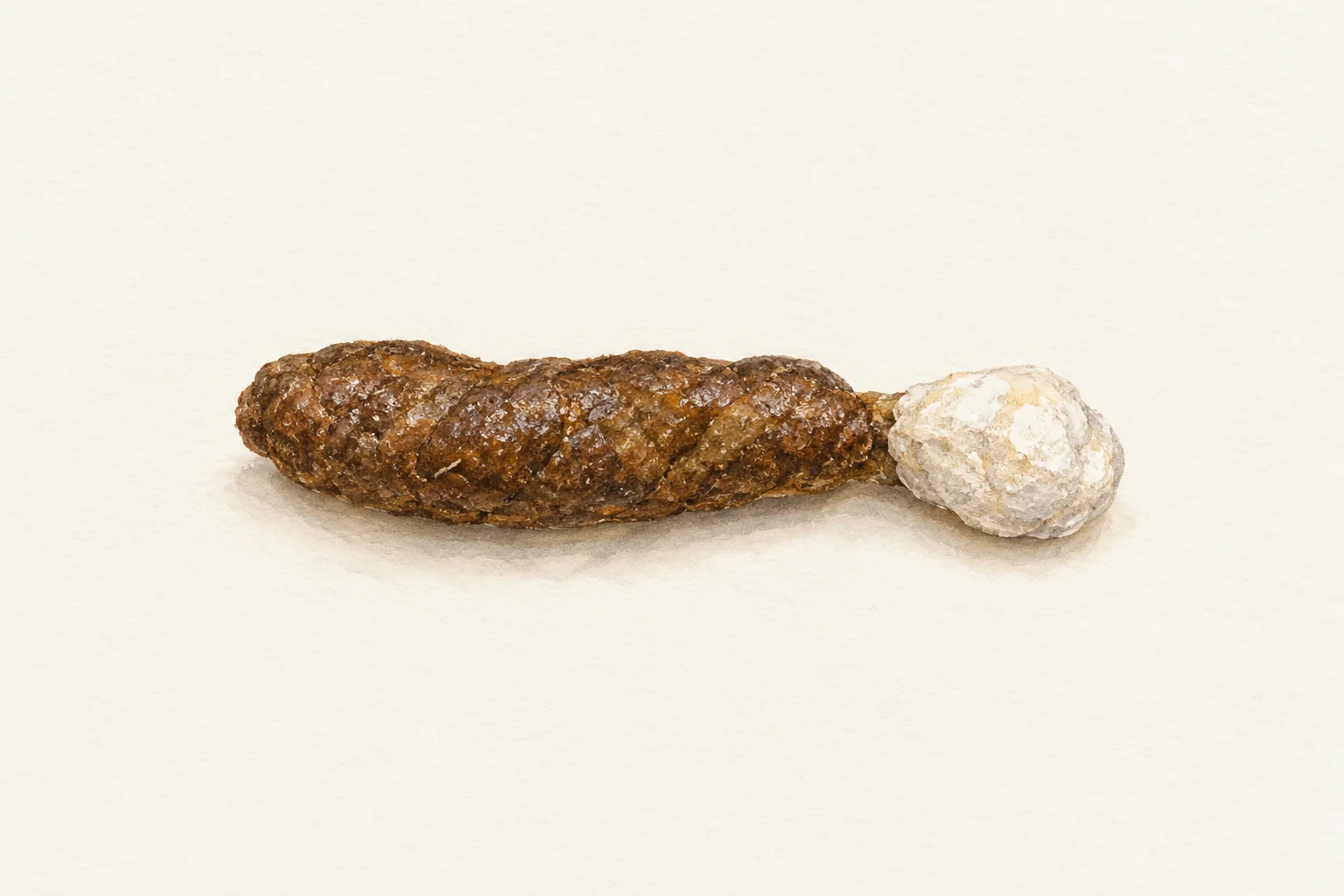
- Feces
- Brown and formed, rather than rock hard.
- Urate
- The smaller white or off-white portion.
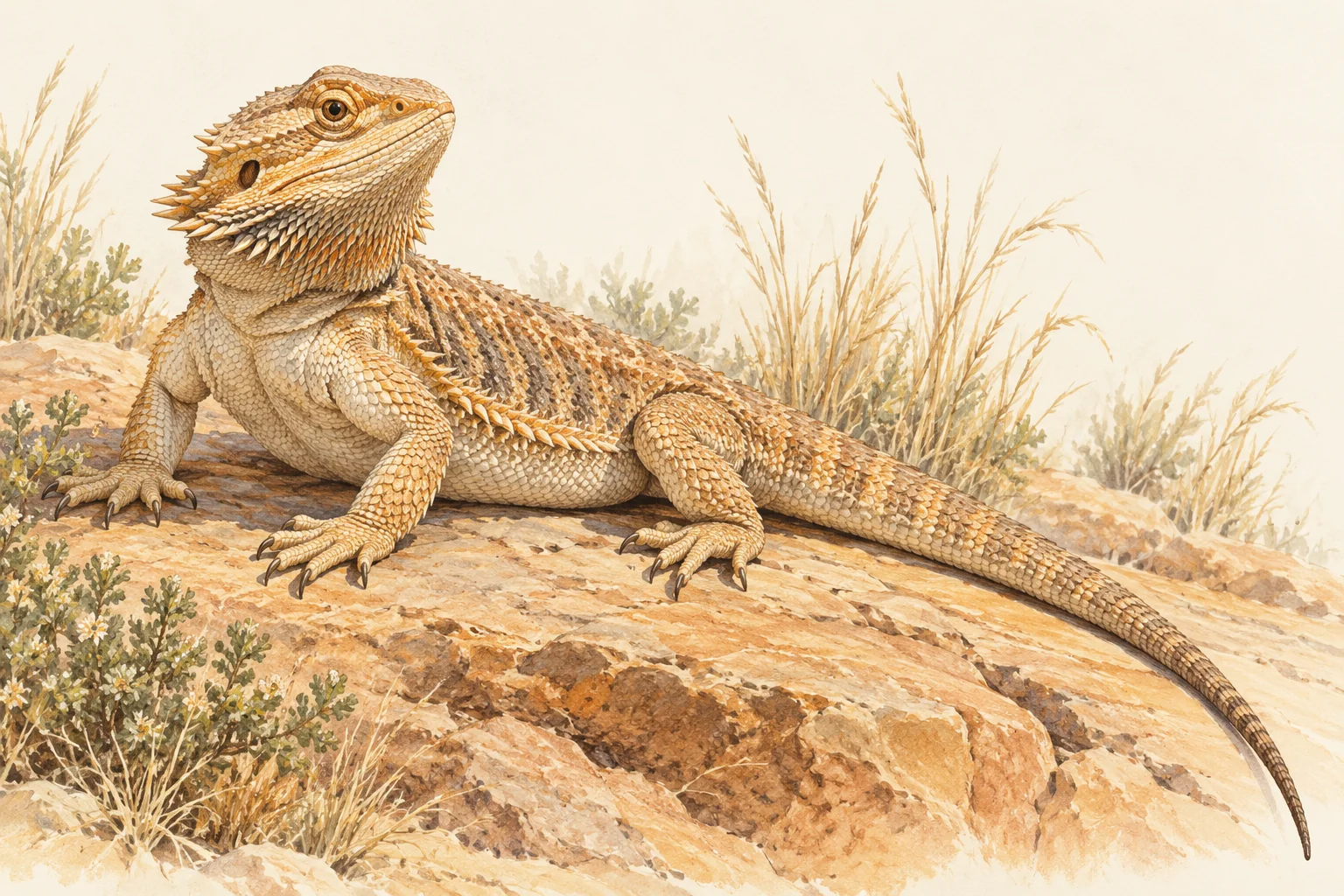
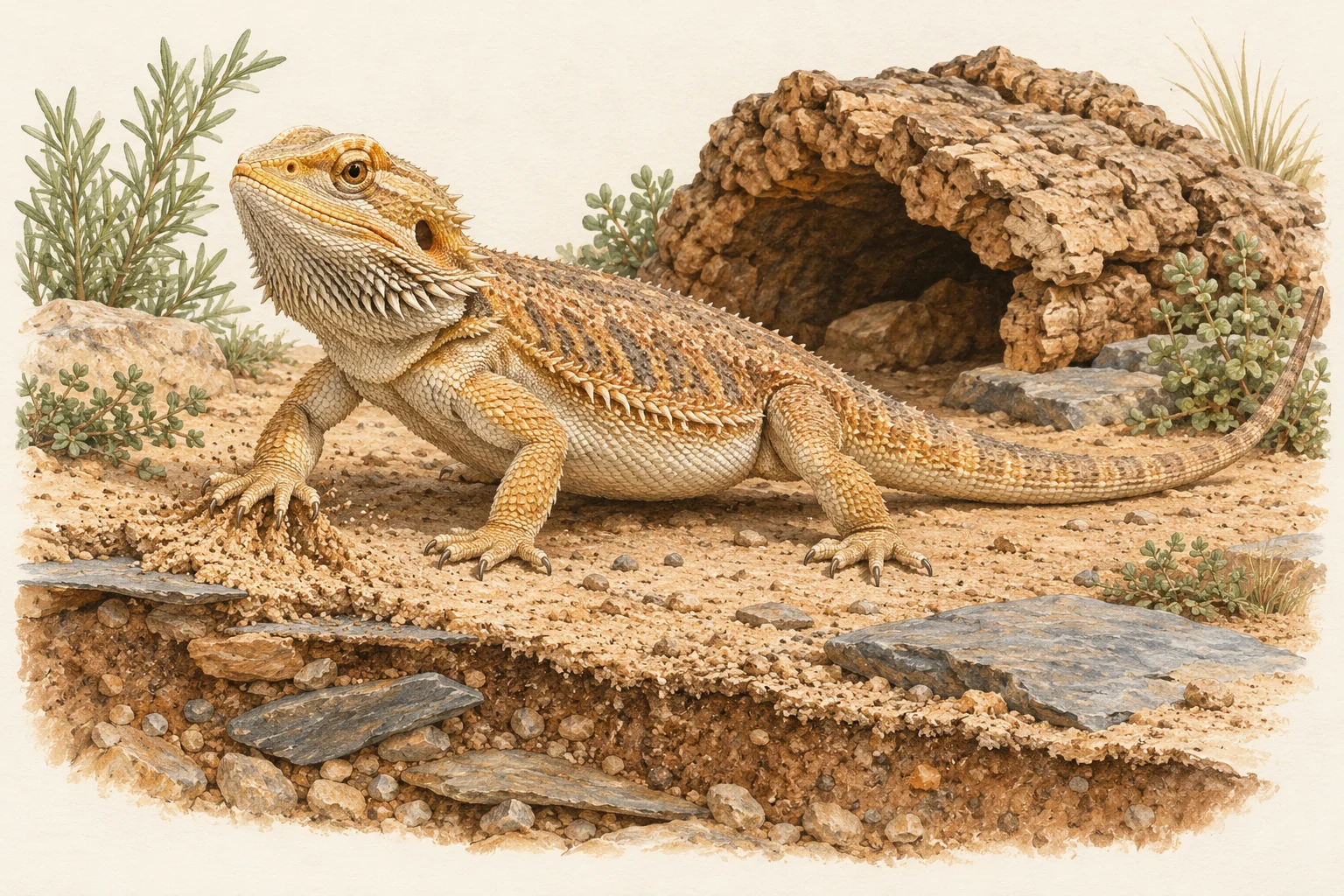
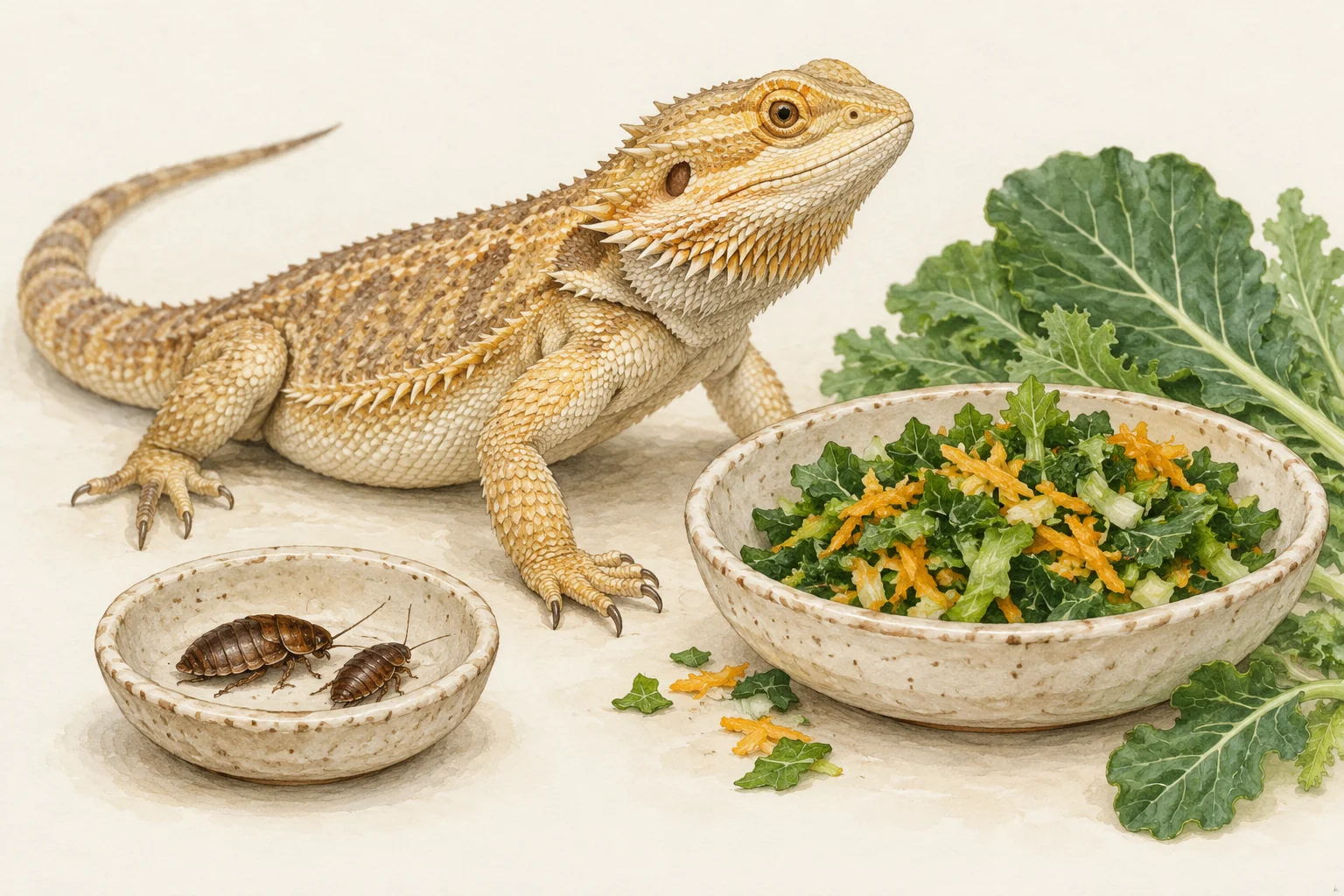
AI-generated educational illustration. Use the source-linked text for measurements and care decisions.
A bearded dragon passes feces and urates together. The feces should be brown and firm, but not rock hard.1 The urate is the white or off-white part, the reptile version of urine.1 The RSPCA adds that droppings should be long and quite firm, and that there may be a small amount of clear liquid when the dragon is well hydrated.7
How often is normal
| Age | Normal frequency |
|---|---|
| Hatchlings, 0–3 months | One to three times a day |
| Juveniles, 4–12 months | One to three times a day, down to every other day |
| Adults, over 12 months | Once to seven times a week |
| Brumating adults | Can go weeks or months without |
Frequencies from Chewy.1 A dragon that is brumating eats little or nothing, so it stops passing waste.3 Babies go more often because of their fast metabolism and insect-heavy diet.1
The best way to know what is normal for your dragon is to note each dropping on a calendar for a few weeks.
Signs that need attention
| What you see | What it can mean | What to do |
|---|---|---|
| Runny, foul-smelling or greenish poop | Diet problems, stress or parasites1 | Call your vet; take a fresh sample |
| Red streaks or blood | Possible blood in the stool1 | See a vet right away1 |
| Urate that is clearly not white or off-white | Chewy describes a normal urate as white or off-white1 | Call your vet with a photo |
| No poop for about 5–7 days outside brumation | Constipation or impaction1 | Call your vet |
| Straining, a swollen belly, a hard lump, no appetite | Possible impaction, which is an emergency1 | See a reptile vet right away1 |
Common causes of constipation include dehydration, a diet low in water-rich foods such as leafy greens and squash, too little activity, low temperatures or missing UVB, and stress.1
Parasite checks
Intestinal parasites such as coccidia and worms are found by examining a fresh sample under a microscope.2
- New dragon: VCA recommends a vet check within two weeks of bringing a reptile home, with a fresh fecal sample in a plastic bag or wrapped in foil.2
- Every year: at least one checkup a year; many reptile vets suggest two.2
- Before brumation: VCA warns that dragons with intestinal parasites can become critically ill when they wake.3
Helping a dragon that is a little backed up
These steps support healthy digestion. They are not a substitute for a vet if the dragon is unwell.
- Water. Keep a shallow bowl of fresh water out, and mist the greens before feeding.5
- Greens. Make sure adults eat mostly greens, not mostly insects.4
- Heat and UVB. Check that the basking spot reaches its target temperature. Low heat and missing UVB can slow digestion.1
- Warm soaks: the sources differ. Chewy suggests a warm soak of 15–30 minutes for a constipated dragon.1 ReptiFiles warns that warm water is a laxative that can make a dragon poop before it has finished digesting, and advises against routine baths more than once a month.4
- Weigh weekly. Sudden weight loss often signals illness.6
Common questions
Why is my bearded dragon's poop runny?
Runny or foul-smelling poop can come from diet problems, stress or intestinal parasites. A vet can test a fresh sample for parasites.
My bearded dragon has not pooped in a week. Is that bad?
Outside brumation, about five to seven days without poop is a reason to call a vet, especially with a swollen belly, straining or a poor appetite. A brumating dragon that is not eating will not pass much.
Is it normal for urates to be yellow or orange?
Urates should be white or off-white. A clearly different color is worth a call to your vet, along with a photo and a fresh sample.
Do baths help a bearded dragon poop?
Sources differ. Chewy suggests a warm soak of 15–30 minutes. ReptiFiles warns that warm water can make a dragon poop before food is fully digested, and advises against routine baths more than once a month. A dragon that is truly constipated should see a vet.
Sources
Numbers in the text link to these sources. We checked each one on the date shown.
- 1How Often Should a Bearded Dragon Poop?Chewy Editors, reviewed by Dr. Melissa Witherell. Chewy. Checked Oct 29, 2026.
- 2Veterinary Care: New Reptile VisitGregory Rich, DVM; Rick Axelson, DVM. VCA Animal Hospitals. Checked Oct 29, 2026.
- 3Brumation in Bearded DragonsGregory Rich, DVM. VCA Animal Hospitals. Checked Oct 29, 2026.
- 4Bearded Dragon Diet & NutritionReptiFiles. Checked Oct 29, 2026.
- 5Bearded Dragons: FeedingGregory Rich, DVM; Laurie Hess, DVM; Rick Axelson, DVM. VCA Animal Hospitals. Checked Oct 29, 2026.
- 6Bearded Dragon Diseases & HealthReptiFiles. Checked Oct 29, 2026.
- 7Caring for your bearded dragonRSPCA. Checked Oct 29, 2026.
Update history
- : First published.
- : Re-checked every claim against its sources; corrected wording, numbers and attributions.
HerpWise Editorial · About the author and review process
HerpWise Editorial summarizes published veterinary, welfare and specialist care guidance. The sources and check date are listed on each guide. Veterinary review is credited separately when completed.
Suggest a correction to this guide