Short answer
A respiratory infection affects the nose, throat or lungs. Signs include mucus around the mouth or nostrils, wheezing, faster or harder breathing, open-mouth breathing when not basking, puffing the throat, lethargy and poor appetite. Poor conditions, especially the wrong temperatures, high humidity and poor ventilation, are the main risk. Breathing difficulty is an emergency: see a reptile vet promptly. There is no proven home remedy.
What it is
A respiratory infection affects the breathing structures: the mouth, nose, sinuses, windpipe and lungs. It can be caused by bacteria, viruses, fungi or parasites, or a mix.1 Untreated, it can become life-threatening, and breathing difficulty is a medical emergency.1
ReptiFiles describes respiratory infections as rare in bearded dragons.2 When they happen, poor conditions are usually behind them.12
Signs to watch for
Signs can be subtle at first, and a dragon may show only one or two:1
- Mucus around the mouth or nostrils12
- Faster breathing, or more effort to breathe1
- Wheezing1
- Gaping or open-mouth breathing for no clear reason12
- Puffing up the throat or body2
- An outstretched neck1
- Lethargy, poor appetite and weight loss12
Know your dragon’s normal breathing and behavior, so small changes stand out.1
Causes and risk factors
- Poor husbandry is the number one risk factor: wrong temperatures, humidity, lighting, diet or space, and no routine vet care.1
- Temperatures too low and humidity too high are the common setup causes, according to ReptiFiles.2
- Poor ventilation. The RSPCA says good ventilation is essential to reduce the risk of respiratory infections, and that low humidity, about 30–40% at the cool end, helps prevent breathing problems.3
- Stress, overcrowding and poor hygiene.1
- Mouth infections can spread into the respiratory tract.1
- Young, old and already-sick dragons are at higher risk.1
How vets diagnose and treat it
A vet takes a full history of your setup, examines the dragon and usually takes X-rays of the lungs. Blood tests, a fecal test and tests to identify the germ, such as PCR or a lung wash, may follow.1
Treatment depends on the cause and may include antibiotics, antiparasitic or antifungal drugs, often by injection, plus supportive care such as fluids, heat support and sometimes oxygen.1 Vets often advise keeping a recovering reptile at the warmer end of its normal range.1
PetMD is clear that there is no proven home remedy, and that good husbandry prevents most respiratory infections.1
A note on conflicting advice
ReptiFiles’ short article on respiratory infection says to keep temperatures above 80°F day and night.2 Its own lighting guide gives a normal night range of 55–75°F for healthy adults.4 For a sick dragon, follow your vet’s instructions on temperature rather than either general figure.
Prevention
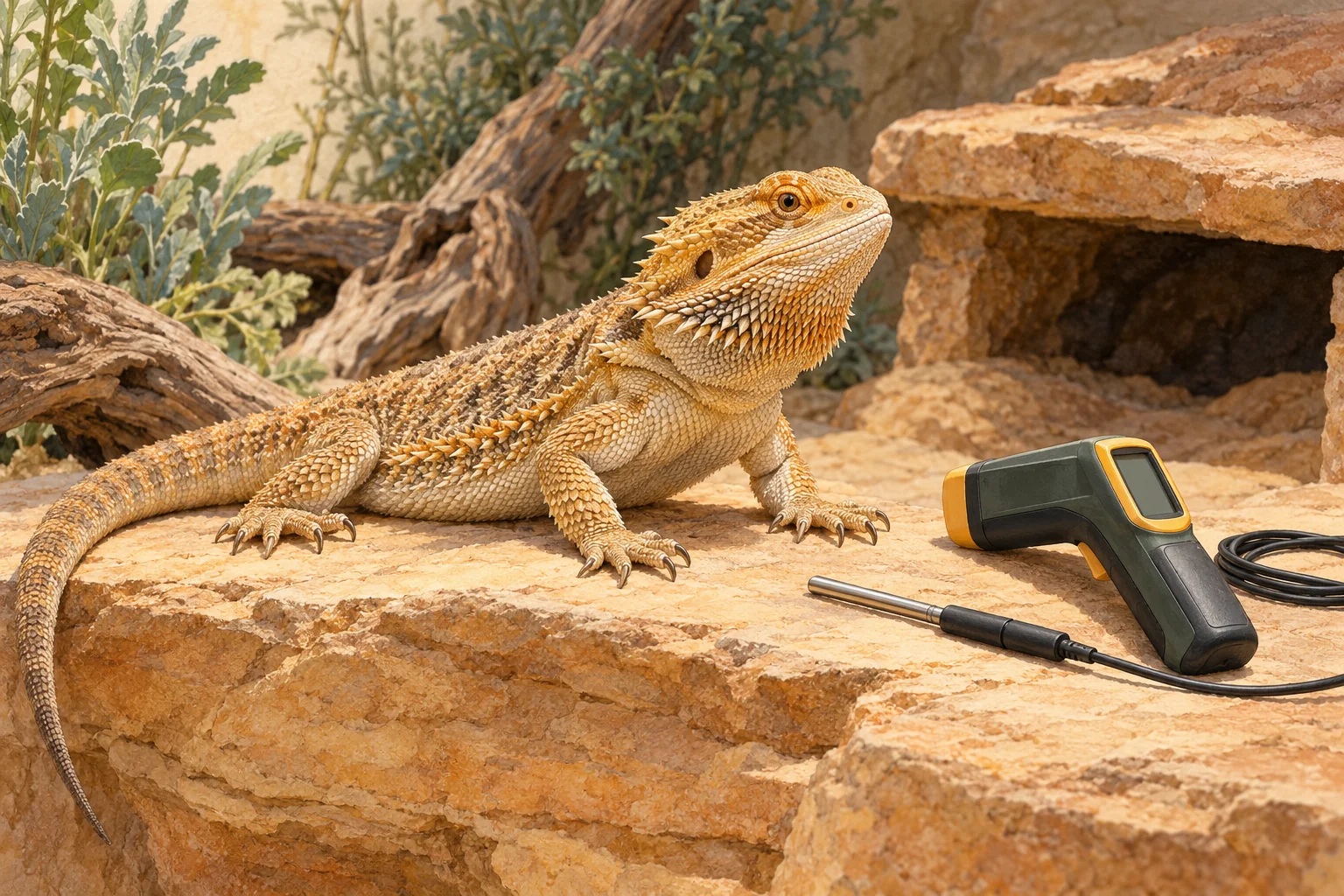
- Keep the basking spot and cool end in range, with a measured gradient.4
- Keep humidity low, around 30–40%, and the enclosure well ventilated.3
- Keep it clean, and quarantine new reptiles.1
- Book routine vet checks.1
See our lighting and heat guide for the full setup.
Common questions
Why is my bearded dragon breathing with its mouth open?
ReptiFiles lists gaping for no apparent reason as a sign of respiratory infection, and PetMD lists open-mouth breathing. If your dragon breathes with its mouth open away from the basking spot, or also has mucus, wheezing or lethargy, see a vet.
Do reptiles get a fever with an infection?
No. PetMD explains that reptiles rely on their environment for body heat, so they do not run a fever. That is one reason infections can be easy to miss.
How long does recovery take?
PetMD says to expect slow but steady improvement over weeks or even months, sometimes with care in a hospital first.
Sources
Numbers in the text link to these sources. We checked each one on the date shown.
- 1Respiratory Infections in ReptilesLauren Jones, VMD. PetMD. Checked Oct 29, 2026.
- 2Bearded Dragon Respiratory InfectionReptiFiles. Checked Oct 29, 2026.
- 3Caring for your bearded dragonRSPCA. Checked Oct 29, 2026.
- 4Bearded Dragon Lighting, Heating & Humidity RequirementsMariah Healey. ReptiFiles. Checked Oct 29, 2026.
Update history
- : First published.
- : Re-checked every claim against its sources; corrected wording, numbers and attributions.
HerpWise Editorial · About the author and review process
HerpWise Editorial summarizes published veterinary, welfare and specialist care guidance. The sources and check date are listed on each guide. Veterinary review is credited separately when completed.
Suggest a correction to this guide