Short answer
Healthy adult leopard geckos often skip meals, especially after a move, in cooler months or in breeding season, and they live off their tail fat. Check the temperatures first, then weigh the gecko. An adult that skips food but holds its weight and tail is usually fine to watch. A juvenile that stops eating, or any gecko that loses weight, refuses food for about two weeks, or seems weak, needs a reptile vet.
First, weigh your gecko
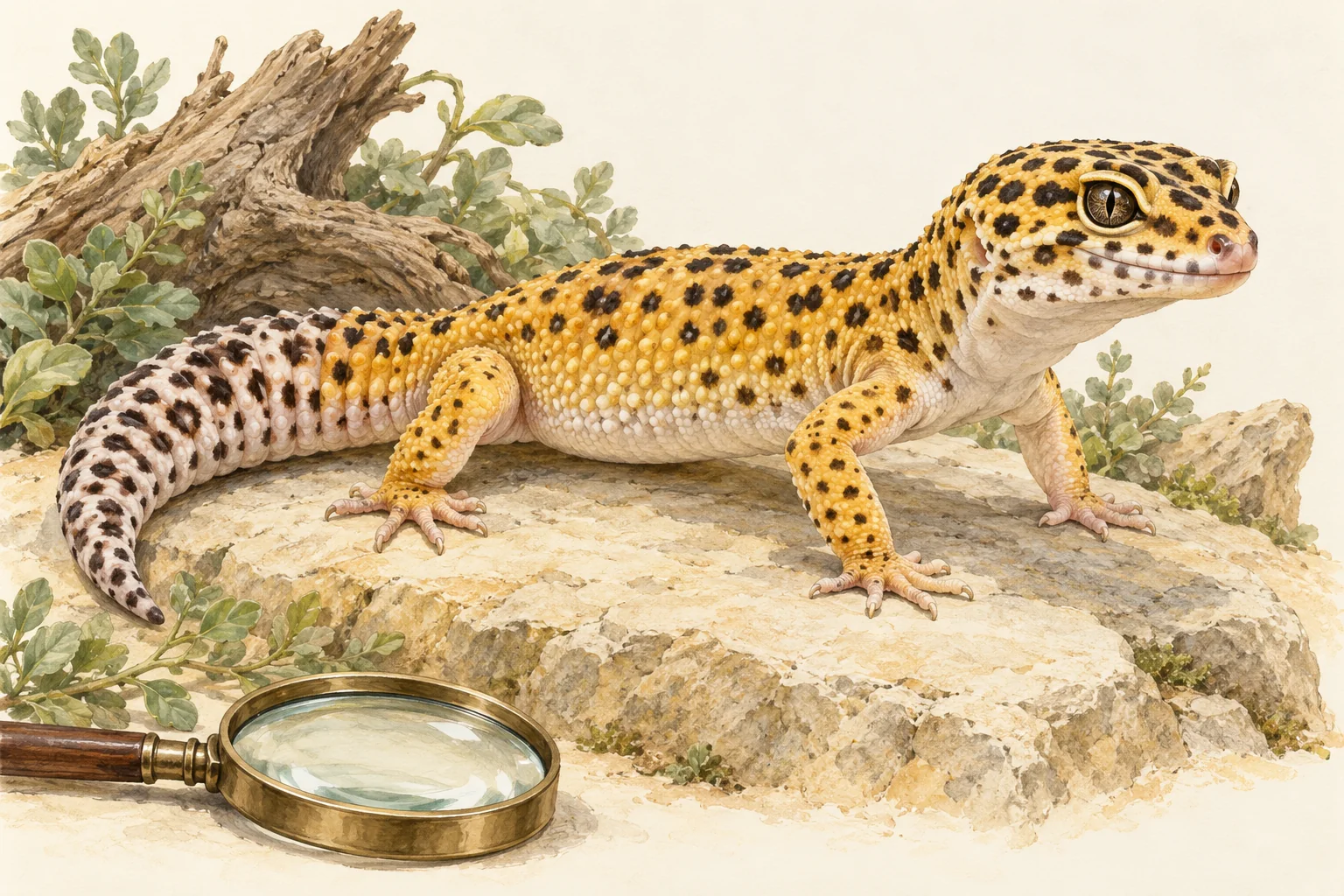
Before anything else, put the gecko on a kitchen scale that reads in grams, and write the number down.
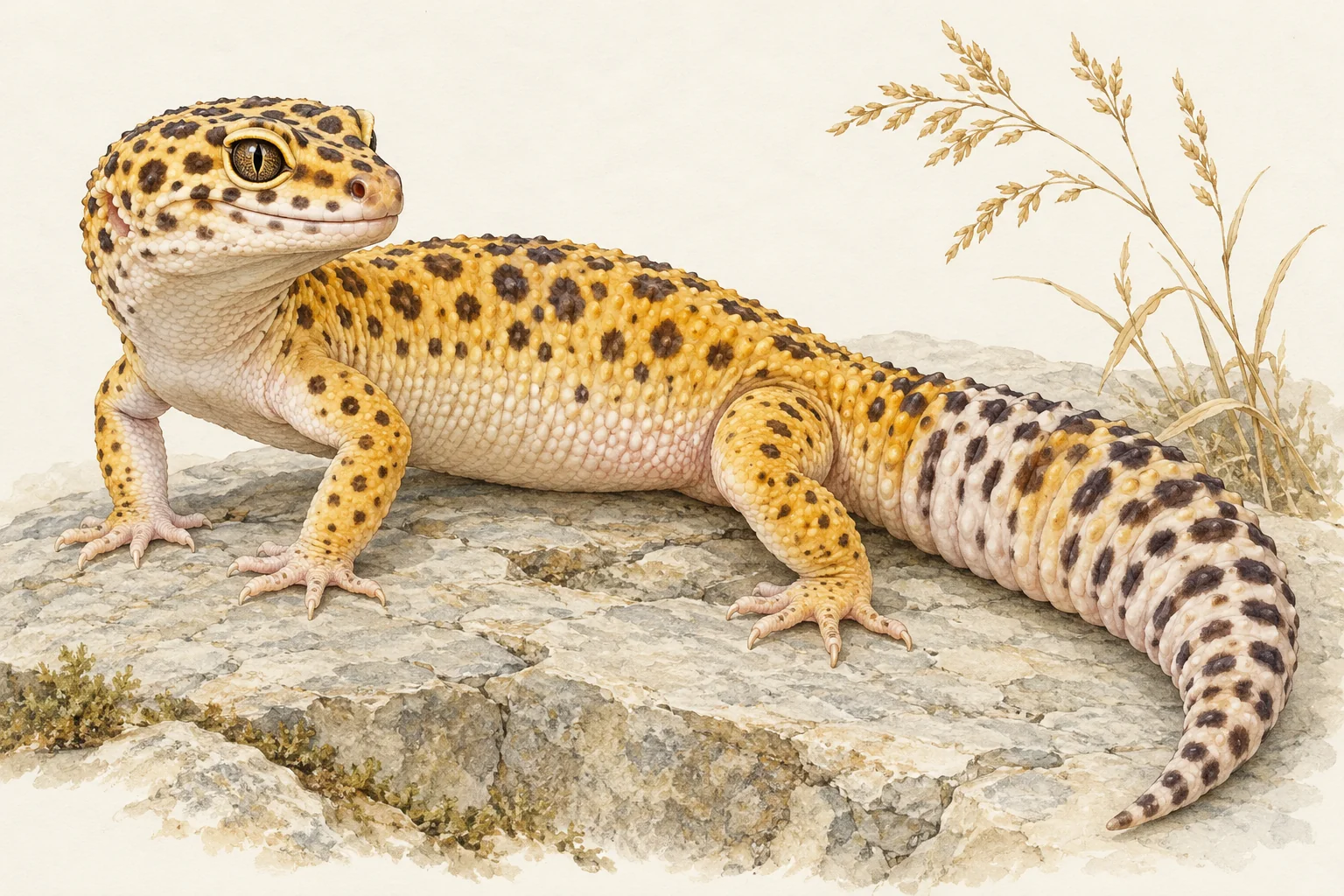
Leopard geckos store fat in their tails.5 A healthy adult can skip several meals without harm. What tells you whether to worry is the weight and the tail, not the number of meals missed. Weigh it weekly while it is off its food.1
Anorexia is a symptom, not a disease.1 The job is to find the cause.
The checks, in order
1. Is it new to your home?
A gecko that has just moved can take days to weeks to settle and start eating.2 Handle it as little as possible, keep the room quiet, and offer food every few days.
2. Are the temperatures right?
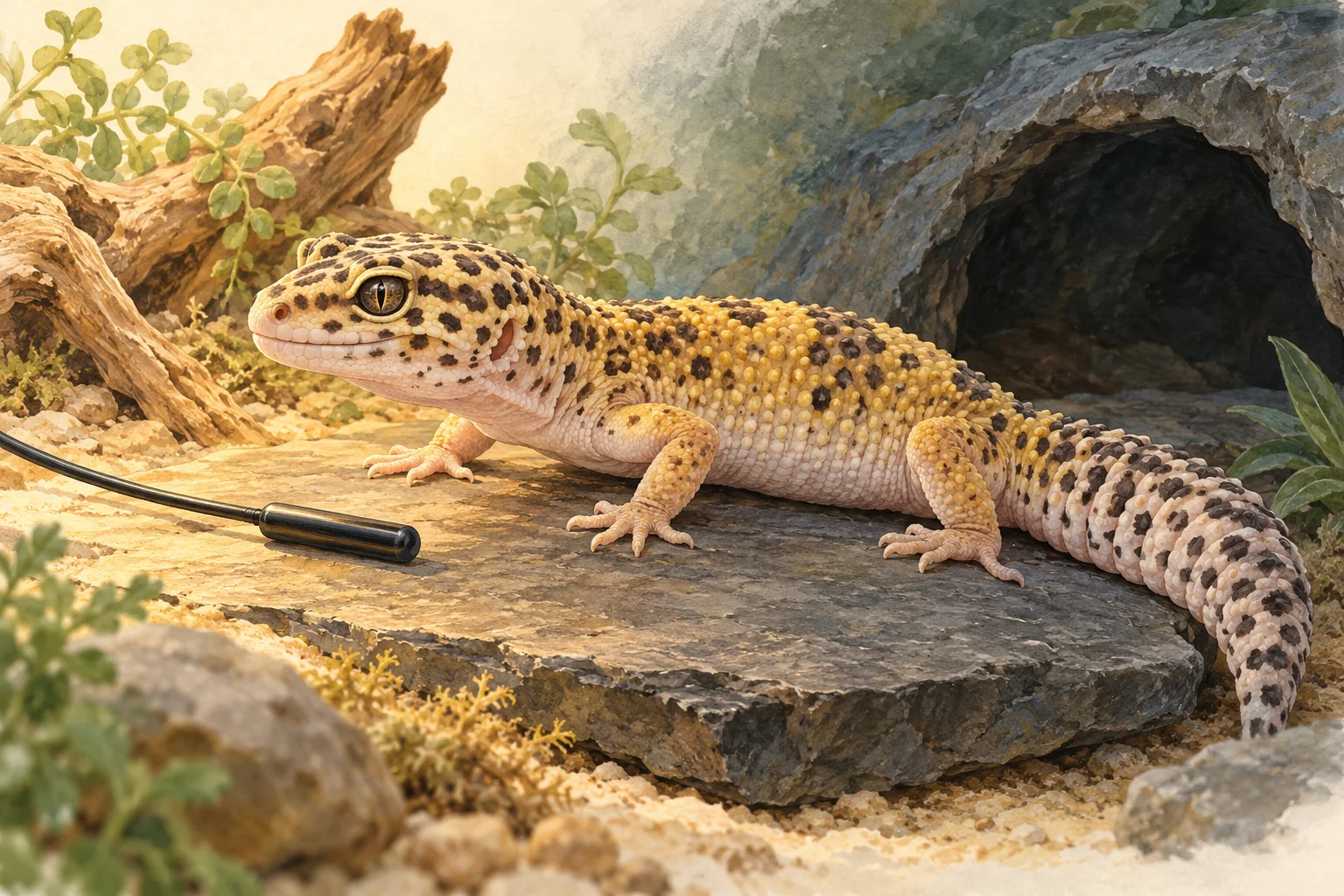
A cold gecko does not digest well and loses its appetite. VCA gives a cage temperature in the mid-80s°F (about 30°C) by day, with nights no lower than about 70°F (21°C).3 Reptiles Magazine’s vet author gives 70–90°F across the enclosure.1
Check with a thermometer probe on the warm floor, not by feel. Our temperature guide covers the full gradient.
3. Is it the season?
Some leopard geckos eat less and sleep more in cooler months. The RSPCA treats this as normal as long as the gecko does not lose weight.5 The University of Liverpool vet practice is stricter: in a properly heated enclosure, lethargy is a sign of illness.6 If your gecko slows down, check the temperatures, weigh it, and call a vet if the weight drops.
4. Is it breeding season?
Adult males may lose interest in food for weeks during breeding season, and females may skip meals because of hormone changes.2 Gravid females, carrying eggs, are one of the causes to rule out.1 The RSPCA notes that adult females can produce infertile eggs even without a male, and need a nest box of moist soil or a sand and soil mix to lay in.7 A swollen belly in a female that stops eating needs a vet check.
5. Is something stressing it?
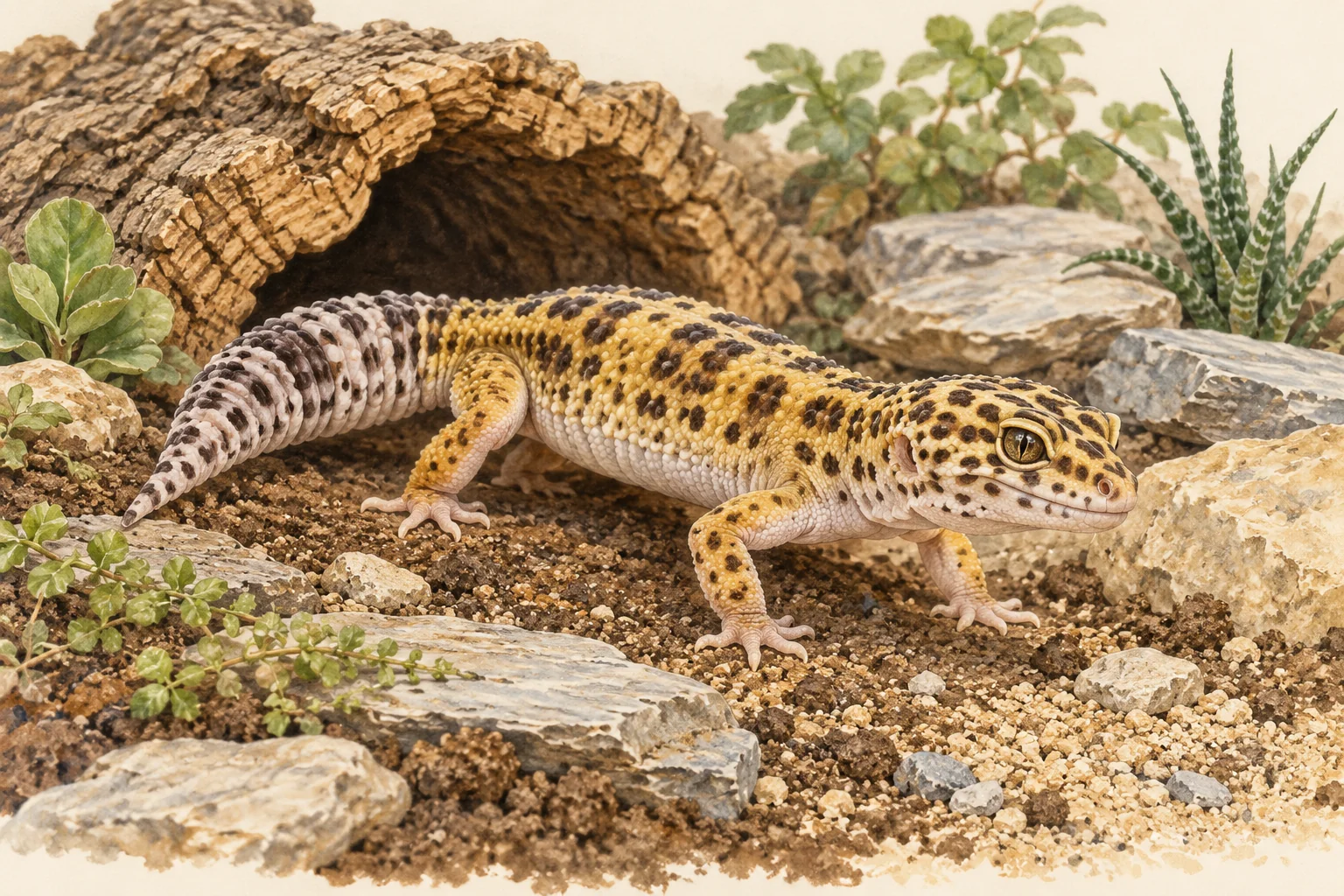
Reptiles Magazine’s vet author warns that two adult males should not be kept together, because they will fight.1 The Vet Desk says loud noise and bright light can raise stress levels.2 Keep each gecko in its own enclosure,2 with enough hides.1
6. Is the food the problem?
- Too much. A gecko fed too often may simply not be hungry.2 VCA suggests every 1–2 days for juveniles and 2–3 times a week for adults.3
- Too little variety. Feeding only one or two insect types can lead to deficiencies.1
- Too big. Insects should be no larger than the space between the gecko’s eyes.2
7. Could it be ill?
If the setup is right and the gecko is still not eating, illness is likely. Vet Times lists hemipene infections in males, heavy pinworm loads and metabolic bone disease among the conditions that cause a leopard gecko to stop eating.4 The Vet Desk adds injuries, eye problems after a bad shed, and impaction.2 These need a vet to diagnose.
What not to do
- Do not force-feed a gecko unless a vet has shown you how and told you to.
- Do not keep changing everything at once. Fix one thing, then give the gecko a few days.
- Do not leave live crickets in the enclosure overnight. Remove uneaten insects.
Common questions
How long can a leopard gecko go without eating?
A healthy adult with a thick tail can go some time, and The Vet Desk says most can go at least a month before it becomes serious. But it also advises a vet visit after about two weeks of refusing food. Do not wait if the gecko is losing weight or is a juvenile.
My new leopard gecko will not eat. Is that normal?
Often, yes. A gecko in a new home can take days to weeks to settle. Keep handling to a minimum, check the temperatures, and offer food every few days.
Why will my leopard gecko only eat worms?
Reptiles Magazine warns against getting a gecko used to just one or two insect types, because a varied diet lowers the chance of nutritional deficiencies. Offer a mix of insects rather than worms alone.
Do leopard geckos stop eating in winter?
Some eat less and sleep more in cooler months. The RSPCA treats this as normal if the gecko does not lose weight. A UK vet practice takes a stricter view: in a properly heated enclosure, lethargy is a sign of illness.
Sources
Numbers in the text link to these sources. We checked each one on the date shown.
- 1Leopard Gecko Lizards Not EatingMargaret A. Wissman, DVM, DABVP. Reptiles Magazine. Checked Oct 29, 2026.
- 2Leopard Gecko Not EatingEd Malaker, reviewed by Dr. Paola Cuevas, MVZ. The Vet Desk. Checked Oct 29, 2026.
- 3Leopard Geckos: Care and FeedingGregory Rich, DVM. VCA Animal Hospitals. Checked Oct 29, 2026.
- 4Management, care and common conditions of leopard geckosMarie Kubiak. Vet Times. Checked Oct 29, 2026.
- 5Leopard gecko care sheetRSPCA. Checked Oct 29, 2026.
- 6Leopard gecko husbandry and careFilipe Martinho, MRCVS. University of Liverpool Veterinary Practice. Checked Oct 29, 2026.
- 7How to care for a leopard geckoRSPCA. Checked Oct 29, 2026.
Update history
- : First published.
- : Re-checked every claim against its sources; corrected wording, numbers and attributions.
HerpWise Editorial · About the author and review process
HerpWise Editorial summarizes published veterinary, welfare and specialist care guidance. The sources and check date are listed on each guide. Veterinary review is credited separately when completed.
Suggest a correction to this guide