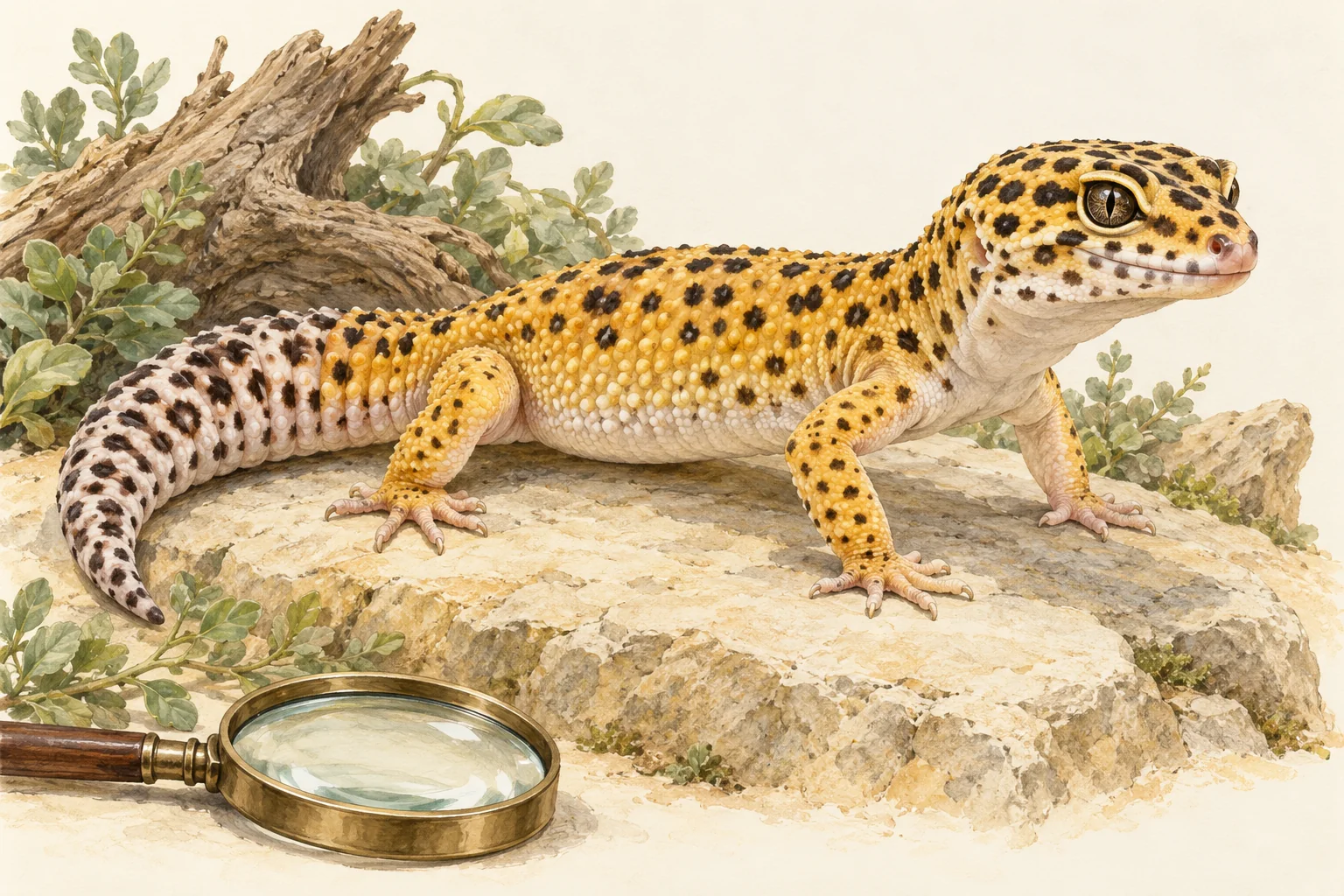
Short answer
Before a shed, a leopard gecko turns pale or dull, then pulls the old skin off, usually in large pieces, and eats it. Young geckos shed more often. The key to an easy shed is a humid hide. Skin left on the toes, tail tip or eyes can cut off blood flow or damage the eyes, so do not ignore it, and do not pull it off dry. A short soak or humid box can loosen it; if it stays stuck, see a reptile vet.
A normal shed
- Before: the gecko’s skin looks pale, grayish or dull as the old layer separates from the new skin underneath.12
- During: it spends time in its humid hide to soften the skin, then pulls the skin off, normally in large pieces.1
- After: it usually eats the old skin, so you may see a bright, fresh-looking gecko and no skin at all.12
There is no rule for how often this happens, but young, growing geckos shed more often than adults.1
The humid hide does most of the work
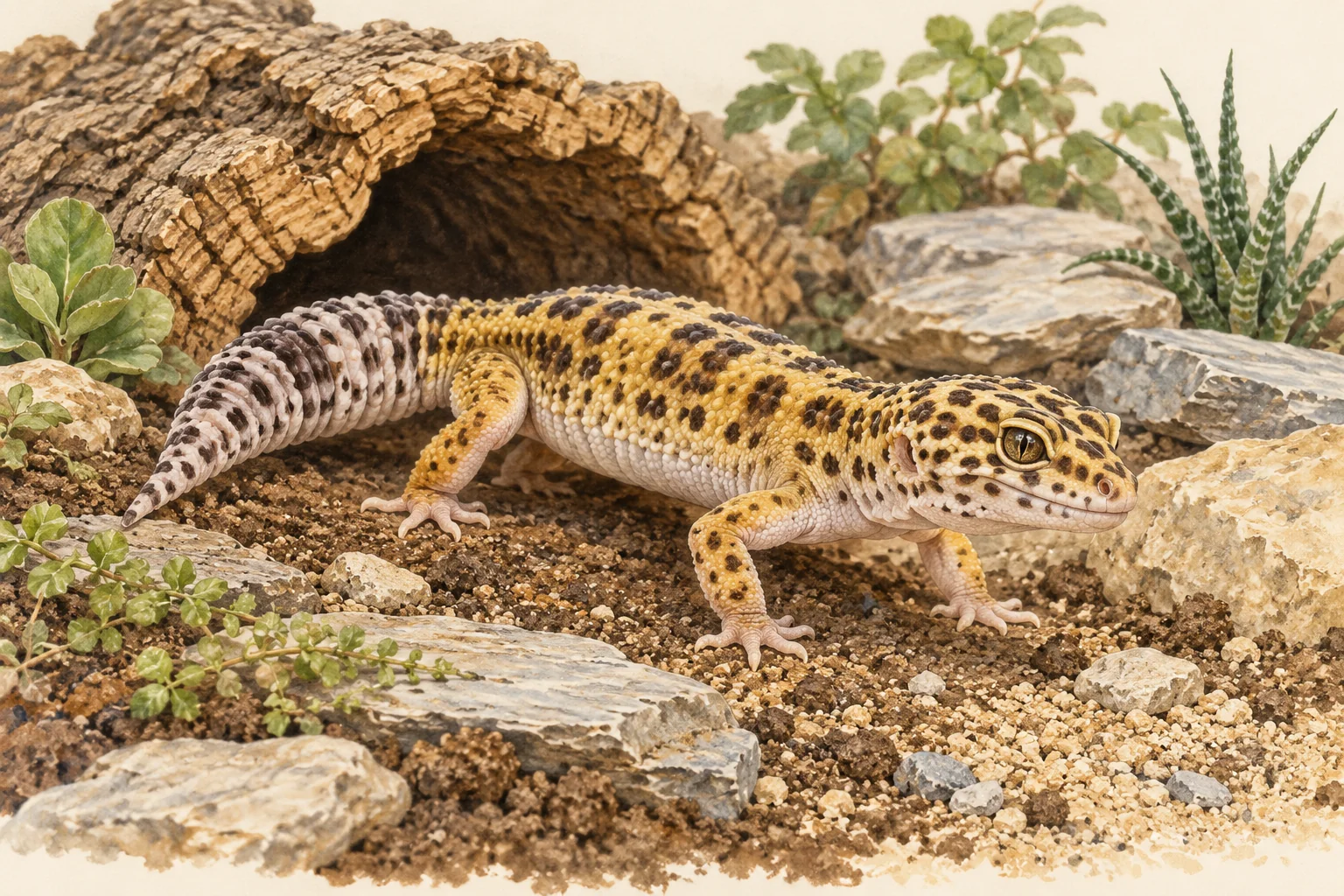
ReptiFiles calls the humid hide the most important part of setup for easy shedding.2 VCA recommends a hide with damp sphagnum moss or vermiculite for moisture and shedding.5
Check the moss every few days and re-dampen it; it should feel moist, not soggy.
Why shed gets stuck
Stuck shed, called dysecdysis when it is severe or keeps happening,2 is usually a setup problem. Vet Times links it to low humidity or dehydration.3 The common causes are:
- No humid hide, or one that has dried out2
- Low humidity overall34
- Dehydration, for example no fresh water3
Where it gets stuck, and why it matters
| Place | Risk |
|---|---|
| Toes | Stuck skin can cut off the blood supply and lead to lost toes12 |
| Tail tip | Can cut off circulation, and the tip may fall off2 |
| Eyes | Skin stuck over the eyes after a shed in low humidity is a common cause of temporary blindness4 |
Check your gecko’s toes, tail tip and eyes after every shed.
What to do about stuck shed
Do not pull dry skin off. It can tear the new skin underneath.1
The sources then differ on what owners should do themselves:
- The RSPCA says that if you still see dry skin caught around the toes or eyes, consult your reptile vet.1
- ReptiFiles describes a home “humidity chamber”: a lidded tub with a warm, wet hand towel, kept at about 80°F on a thermostat-controlled heat pad, covered to keep it dark. The gecko stays in for no more than 20 minutes, then the loosened skin is lifted off gently with fine-tipped tweezers. If it will not come off, repeat the next day, and see a vet if it is still stuck after a week.2
Our advice: a short humid session to soften the skin is reasonable for a bit of skin on the body or a toe. Never use tweezers near the eyes, and see a vet for anything around the eyes, or for toes that look dark, swollen or constricted.
Preventing problems
- Keep a humid hide damp at all times.25
- Keep fresh water available.3
- Keep the enclosure’s overall humidity in range. Our care guide covers the targets.
- Check toes, tail tip and eyes after every shed.
Common questions
How often do leopard geckos shed?
There is no fixed schedule. The RSPCA says young, growing geckos shed more often than adults. Note the date of each shed and you will soon see your gecko's own rhythm.
Why did my leopard gecko eat its skin?
That is normal. Leopard geckos, like most geckos, usually eat their shed skin, so you may never find it.
Should I help my leopard gecko shed?
Not during a normal shed. Leave it alone with access to its humid hide. Only step in if skin stays stuck after the shed, especially on the toes, tail tip or eyes.
Do leopard geckos stop eating when shedding?
Many keepers report that geckos skip a meal or two around a shed. We have not found a veterinary source on this, so judge by weight: a gecko that keeps refusing food or loses weight after a shed needs a vet.
Sources
Numbers in the text link to these sources. We checked each one on the date shown.
- 1How to care for a leopard geckoRSPCA. Checked Oct 29, 2026.
- 2Leopard Gecko SheddingMariah Healey. ReptiFiles. Checked Oct 29, 2026.
- 3Management, care and common conditions of leopard geckosMarie Kubiak. Vet Times. Checked Oct 29, 2026.
- 4Leopard Gecko Not EatingEd Malaker, reviewed by Dr. Paola Cuevas, MVZ. The Vet Desk. Checked Oct 29, 2026.
- 5Leopard Geckos: Care and FeedingGregory Rich, DVM. VCA Animal Hospitals. Checked Oct 29, 2026.
Update history
- : First published.
- : Re-checked every claim against its sources; corrected wording, numbers and attributions.
HerpWise Editorial · About the author and review process
HerpWise Editorial summarizes published veterinary, welfare and specialist care guidance. The sources and check date are listed on each guide. Veterinary review is credited separately when completed.
Suggest a correction to this guide