Short answer
Dropping the tail is a natural defense, and it is usually not life-threatening. There is little or no bleeding. Swap loose substrate for paper towel, keep the enclosure very clean and warm, and watch the stump for infection. The tail will regrow over weeks to months, but it will look different. Because the tail is a fat store, keep your gecko well fed while it heals. See a vet if the stump bleeds, swells or looks dirty.
Why it happens
Many lizards, leopard geckos included, can drop their tails on purpose. It is called autotomy, and it is a defense against predators.1 The tail has built-in fracture lines, and muscles around them contract to release it.1
ReptiFiles lists the usual triggers in pet leopard geckos:2
- Stress or fear
- Being grabbed by the tail
- Stuck shed around the tail
- Illness
- Bullying by a cagemate
PetMD adds that malnourished, sick or weak lizards drop their tails more easily.1
The first hours
- Do not panic. It is not a life-threatening injury, and there is usually little or no bleeding.1
- If the stump bleeds, press gently with a clean towel or gauze and take your gecko to an exotics vet.1
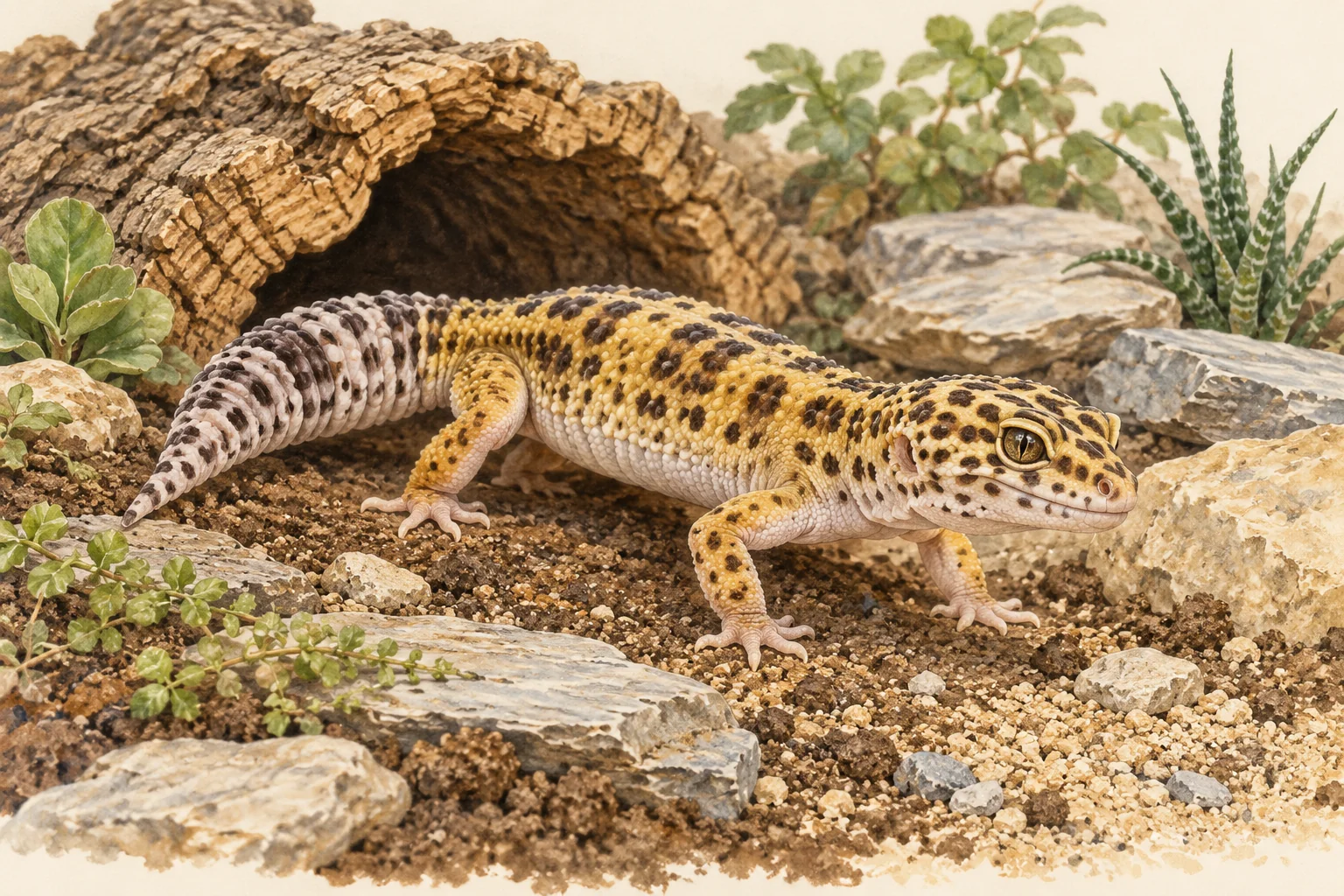
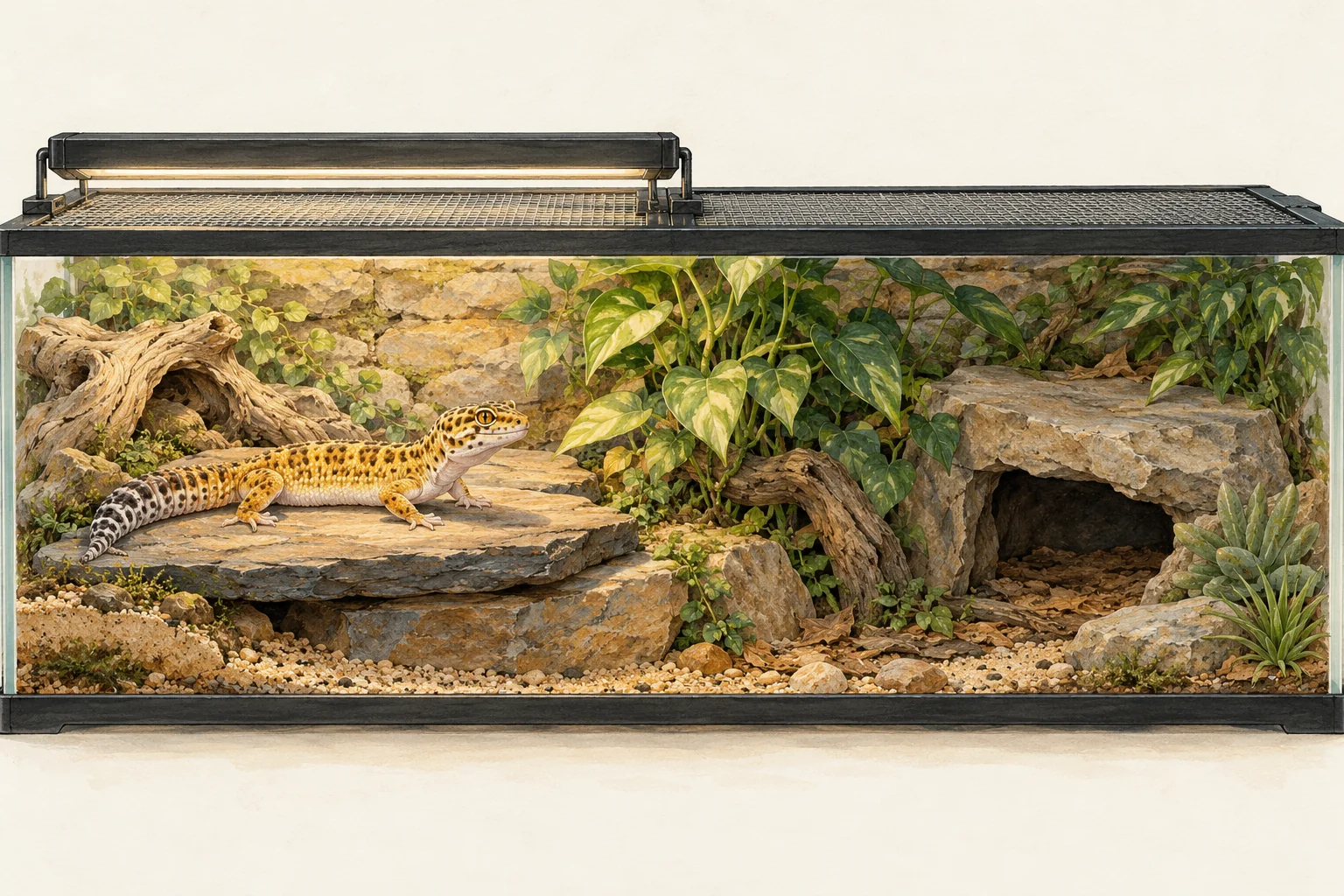
- Swap loose substrate such as sand, soil or moss for paper towel, so debris cannot stick to the stump.12
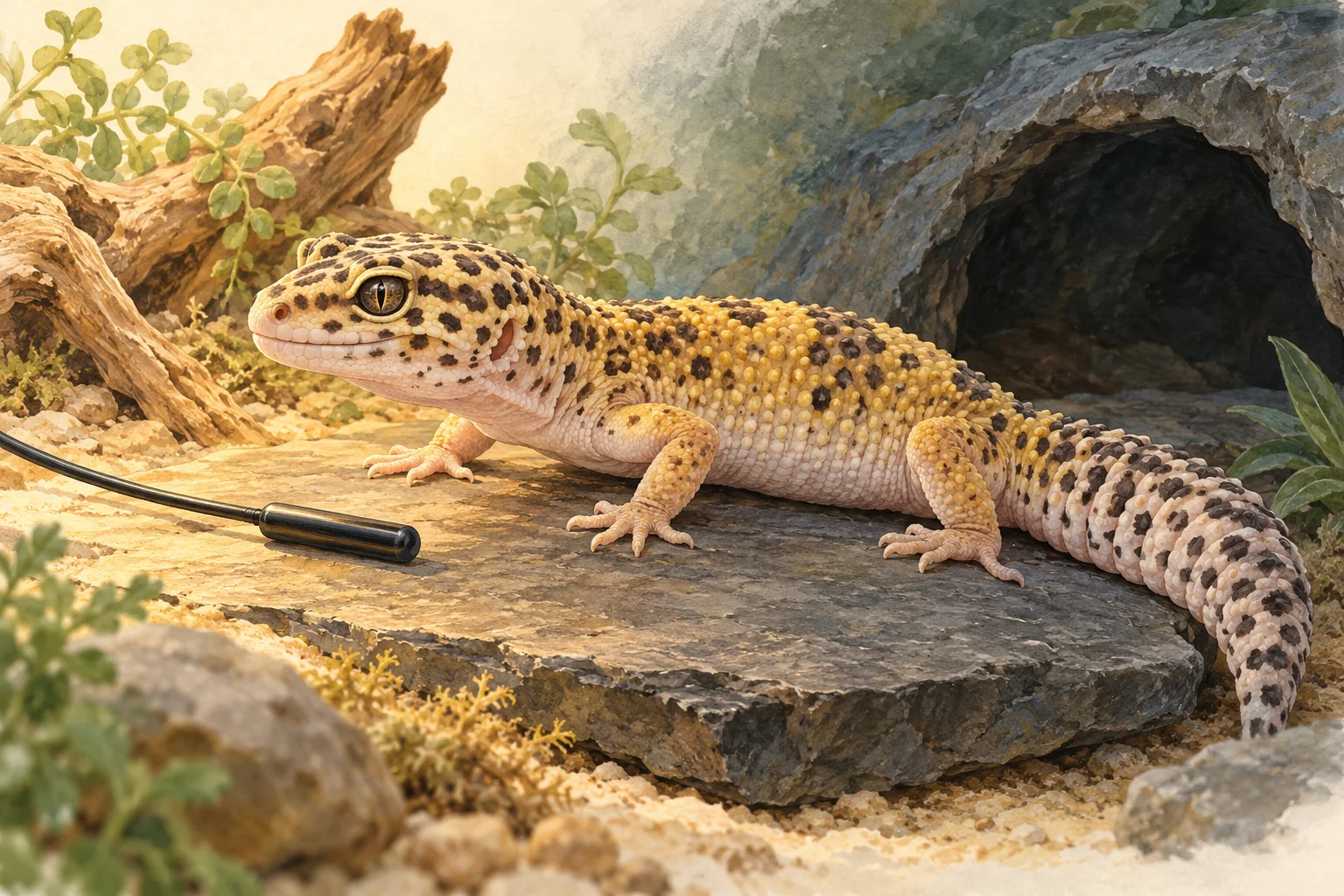
- Keep the enclosure very clean, at its normal temperatures, with fresh water and a hide.1
Should you treat the stump?
The sources disagree:
- PetMD advises against cleaning, bandaging or applying ointment, because it can interfere with natural healing.1
- ReptiFiles suggests a disinfectant such as povidone-iodine, or a triple antibiotic ointment.2
The biggest risk after tail loss is infection.1 If you want to apply anything, ask your vet first.
Feeding while it heals
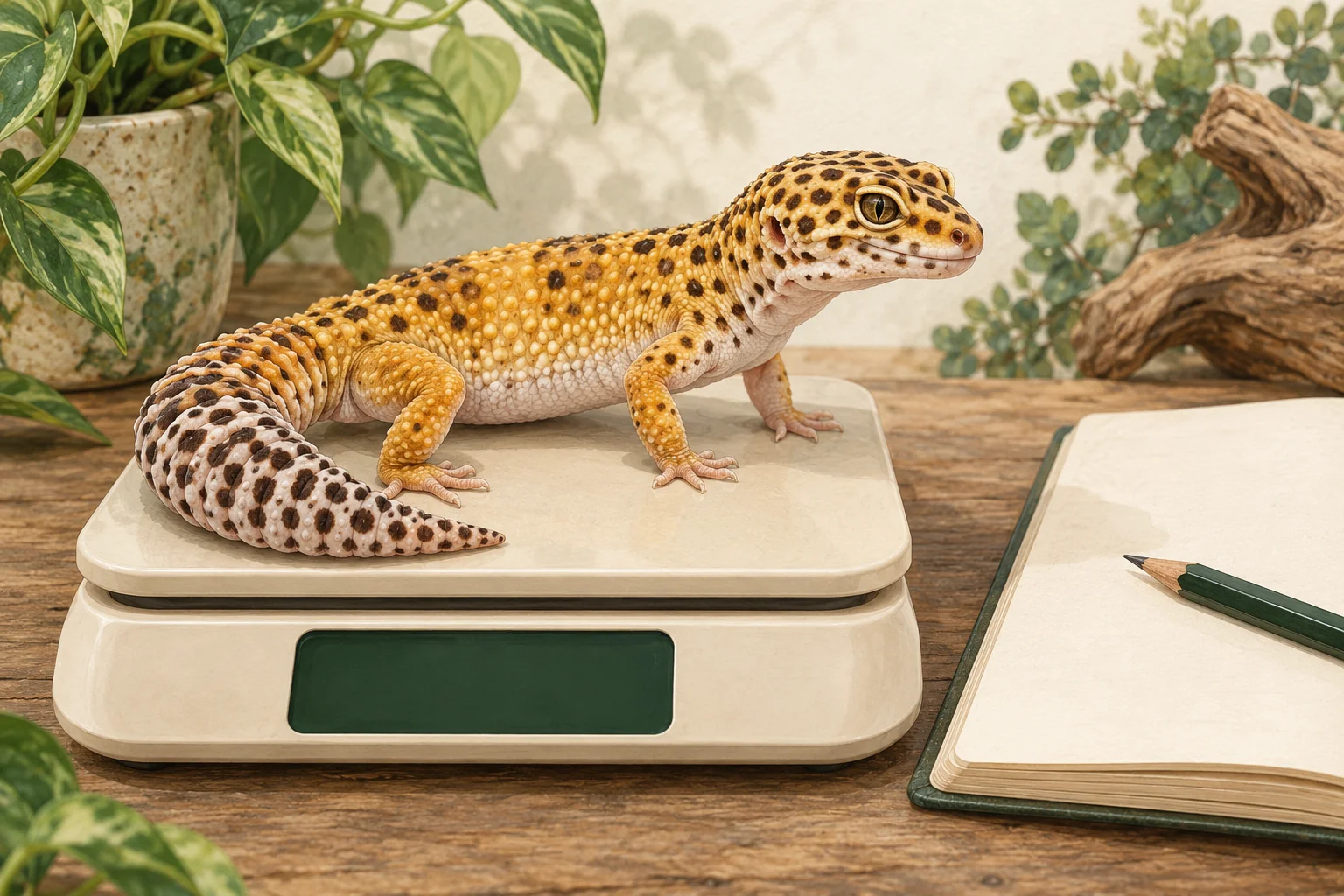
A leopard gecko’s tail is its main fat store, so losing it means losing reserves. ReptiFiles says the gecko is more vulnerable to illness until the tail regrows, and suggests feeding more than usual for two to four weeks.2 Vet Times advises feeding daily while the gecko recovers, but not feeding crickets, which may injure the open wound.3 Keep dusting insects with calcium.
How it grows back
- About 7–10 days: a thin layer of skin covers the stump.1
- About a week later: the spinal cord begins to regenerate inside a tube of cartilage, because lizards cannot grow new vertebrae.1
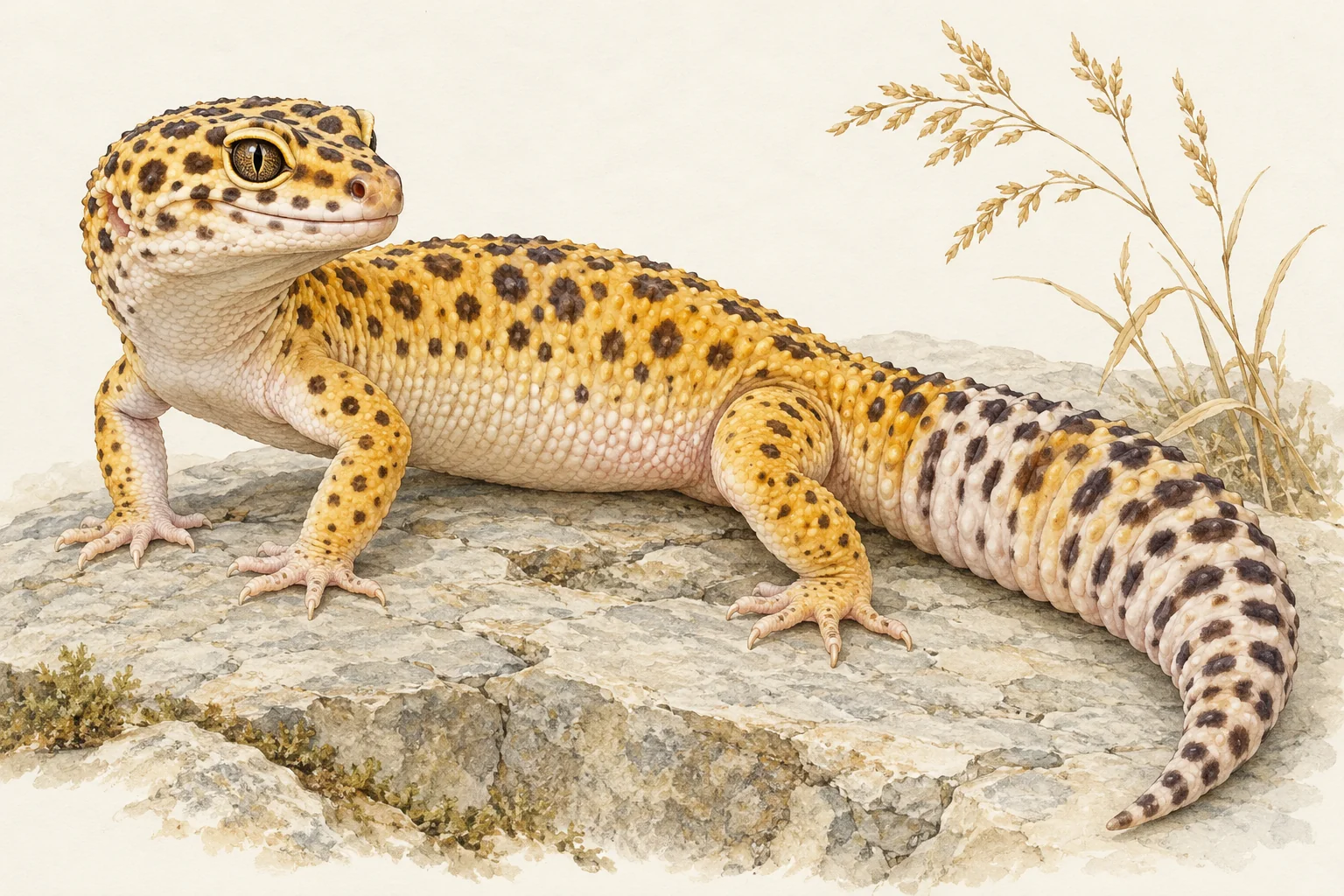
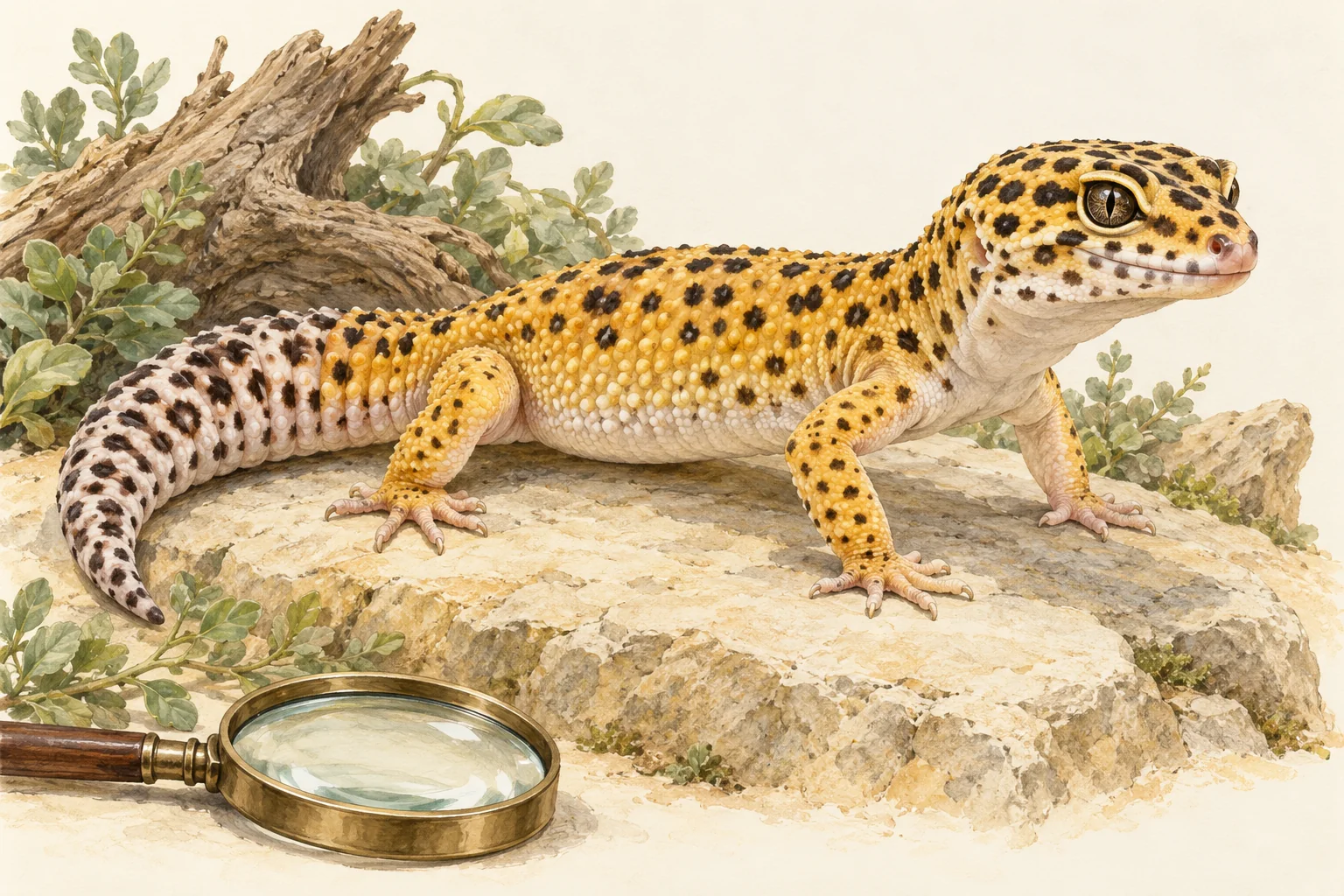
- Weeks to months: full regrowth.1 The new tail will not look the same as the original:2 it is often darker, may lack normal scales, and is less flexible.1
Preventing it
Common questions
Why is the dropped tail still moving?
That is normal. PetMD says a detached tail can wriggle on its own for up to 30 minutes. In the wild, this distracts a predator while the lizard escapes.
Should I put ointment on the stump?
Sources disagree. PetMD advises against cleaning, bandaging or putting ointment on the stump, because it can interfere with natural healing. ReptiFiles suggests a disinfectant or antibiotic ointment. If you are unsure, ask your vet before applying anything.
Can a leopard gecko drop its tail more than once?
Yes. PetMD says lizards can drop and regrow their tails more than once, but the break usually happens closer to the body each time.
Can I reattach the tail?
No. PetMD explains that the blood vessels and nerves are severed at the fracture line, so the tail cannot be reattached.
Sources
Numbers in the text link to these sources. We checked each one on the date shown.
- 1Lizard Tail Loss: What To DoCatherine Gose, CVT, reviewed by Melissa Witherell, DVM. PetMD. Checked Oct 29, 2026.
- 2Leopard Gecko Tail LossMariah Healey. ReptiFiles. Checked Oct 29, 2026.
- 3Management, care and common conditions of leopard geckosMarie Kubiak. Vet Times. Checked Oct 29, 2026.
Update history
- : First published.
- : Re-checked every claim against its sources; corrected wording, numbers and attributions.
HerpWise Editorial · About the author and review process
HerpWise Editorial summarizes published veterinary, welfare and specialist care guidance. The sources and check date are listed on each guide. Veterinary review is credited separately when completed.
Suggest a correction to this guide