Short answer
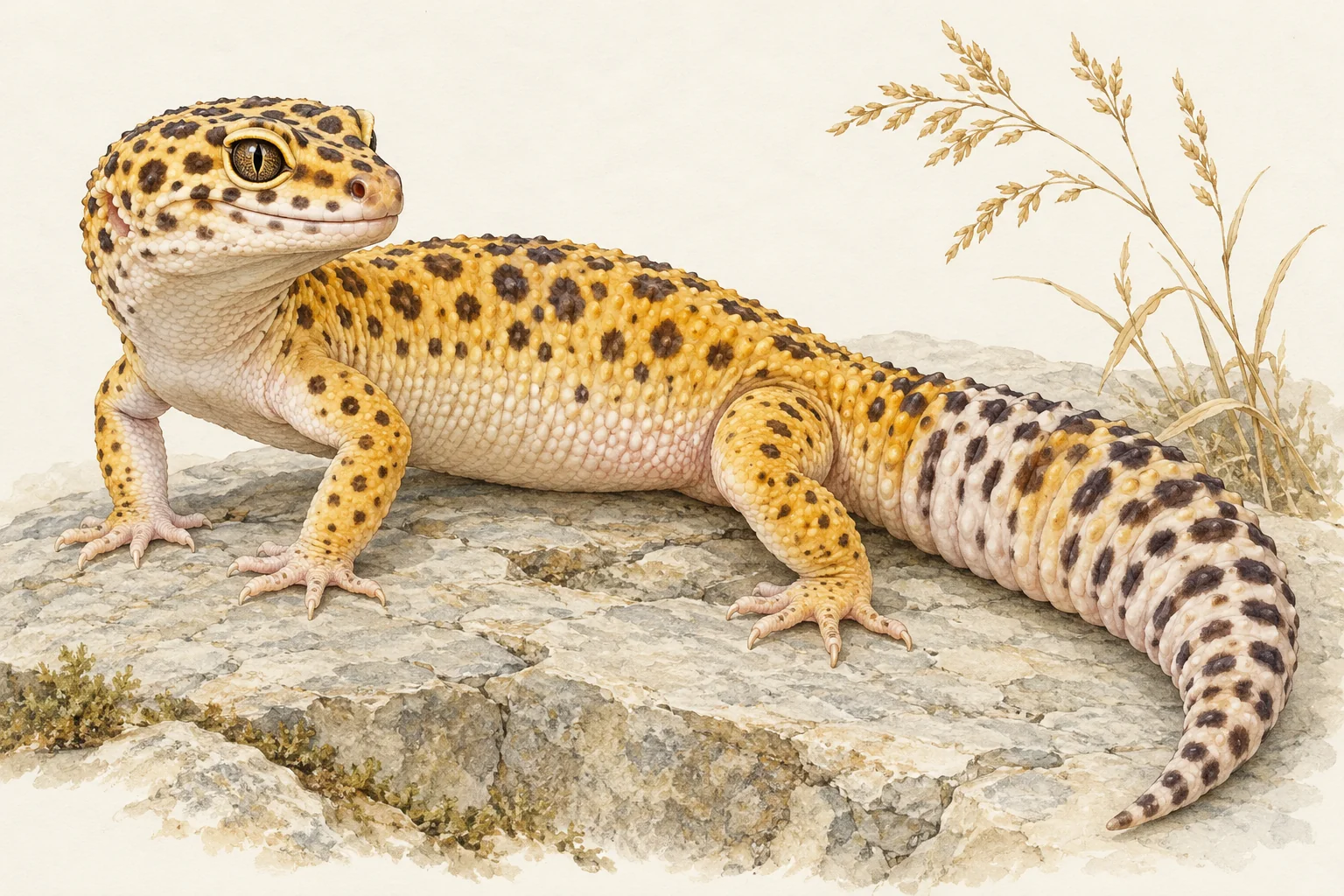
Look at the tail. In a healthy leopard gecko the tail is nearly as wide as the body. A tail wider than the body, a hidden spine or fat folds point to obesity; a thin "stick tail" with visible hips and spine points to weight loss. There is no single healthy weight, so weigh your gecko in grams every week or two and watch the trend. Cut back fatty worms gradually to slim it down, and see a vet for any fast or unexplained weight loss.
Why so many owners ask this
“Is my gecko fat?” is one of the most-discussed questions on r/leopardgeckos. In the past year, three posts asking it each drew more than 200 comments, including one from an owner whose pet store had just called their gecko obese. The answers often disagree, because people judge from one photo.
You can make a better call yourself by checking three things: the tail, the spine and hips, and the trend on a scale.
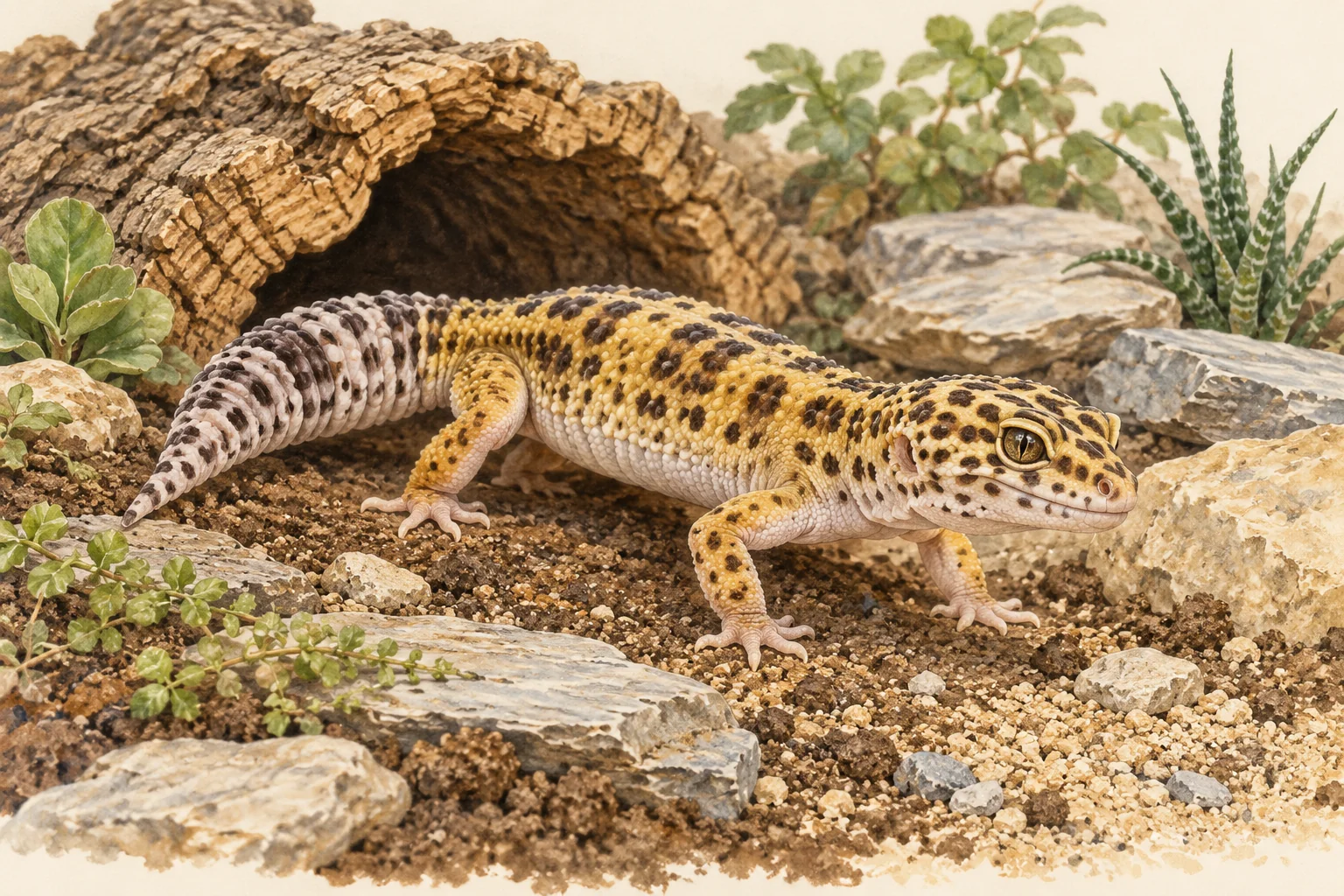
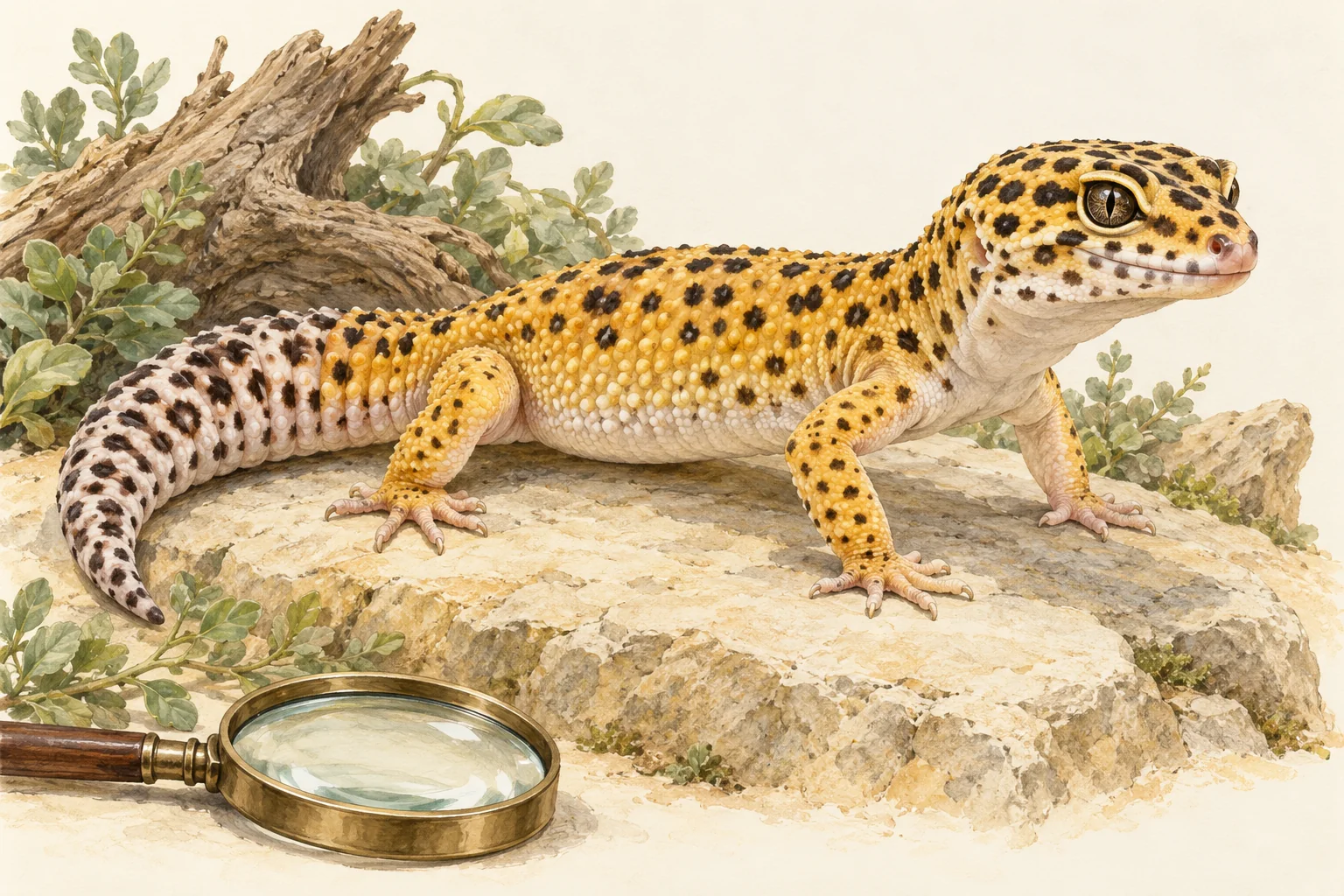
Check the shape
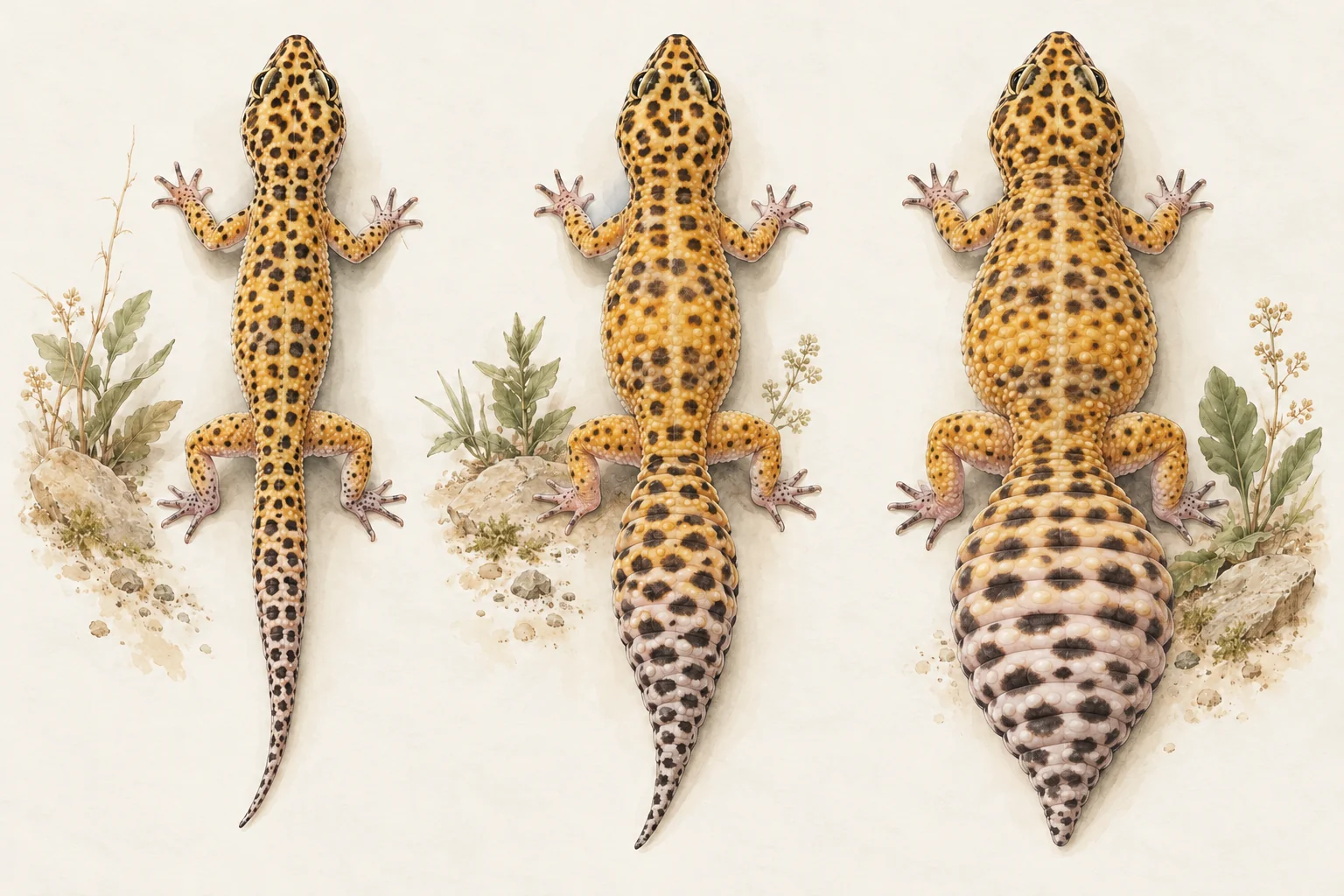
- Too thin
- Tail much narrower than the body; hips and spine may show.
- Moderate condition
- Tail nearly as wide as the body.
- Heavy condition
- Tail wider than the body; body condition needs assessment.
AI-generated educational illustration. Use the source-linked text for measurements and care decisions.
| Too thin | Healthy | Overweight | |
|---|---|---|---|
| Tail | Much narrower than the body; leopard geckos commonly lose the fat stored in the tail, called “stick tail”1 | Nearly as wide as the body1 | Wider than the body1 |
| Spine and hips | Hips, pelvis and spine stand out1 | Smooth outline | Spine and ribs cannot be felt under a fat layer1 |
| Other signs | Sunken eyes from lost fat behind them1 | Clear eyes, belly held off the floor4 | Fat folds under the neck; a pear-shaped body1 |
PetMD’s description is for lizards in general, and the leopard gecko tail rule is the one most specific to this species.1 A thick tail is also one of the RSPCA’s signs of a healthy gecko.4
Weigh it, and watch the trend
There is no one correct weight. Leopard geckos vary in size between lines, and we have not found a veterinary source that sets a single healthy number. What matters is the change over time.
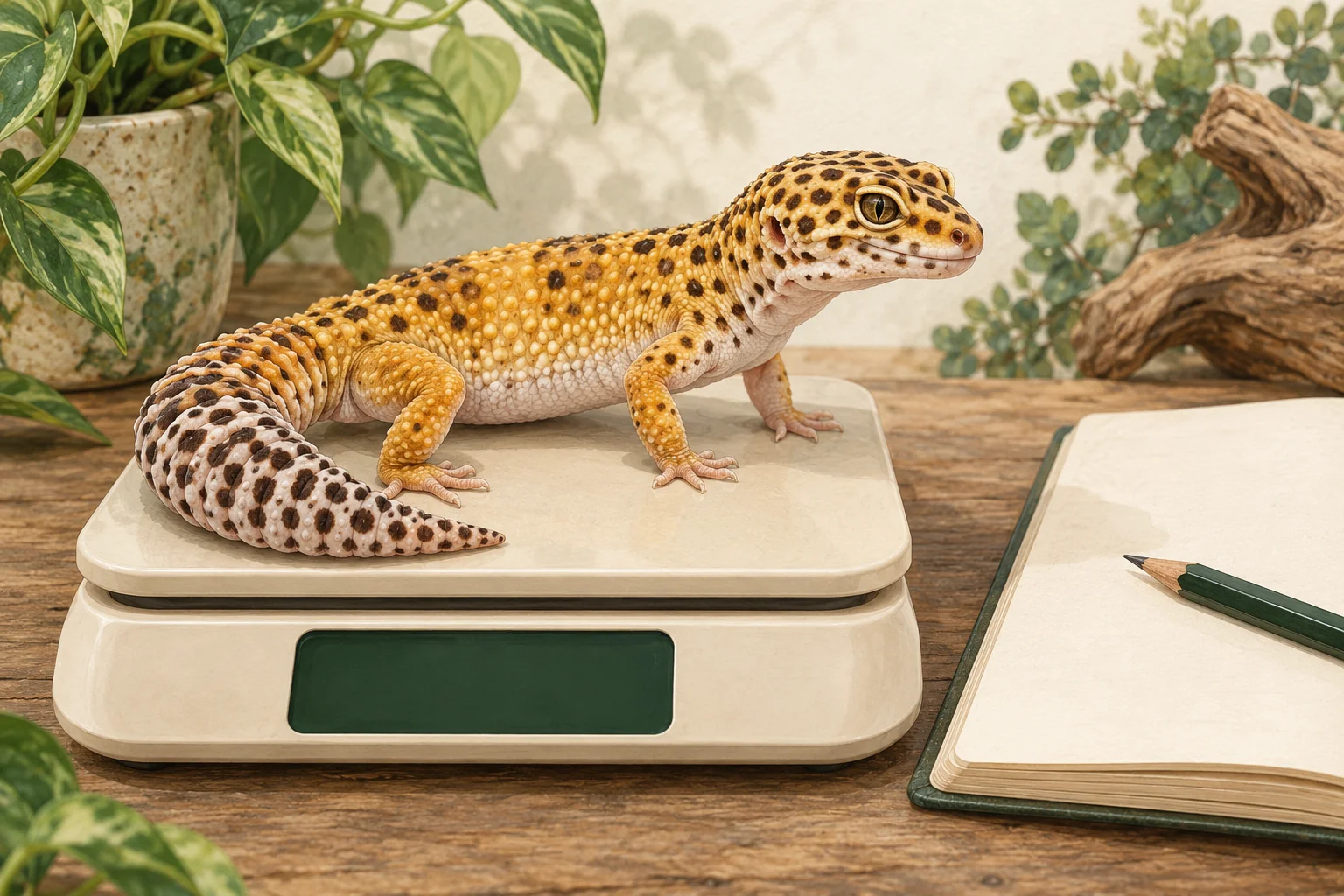
- Use a kitchen scale that reads in grams. Put the gecko in a small tub, weigh, and subtract the tub.
- Weigh every week or two, at the same time of day, before feeding.
- Write each number down with the date.
A juvenile should gain steadily. An adult should hold roughly steady. Weight loss is among the signs that need a vet.45
If your gecko is overweight
PetMD names the usual causes: feeding mostly what the animal likes best, not knowing what the species should eat, temperatures outside its preferred range, and too little exercise.1
- Check how often you feed. VCA gives every 1–2 days for juveniles and 2–3 times a week for adults.2 Many overweight adults are still being fed like juveniles.
- Cut the fatty worms. VCA lists crickets as the main food, with smaller numbers of silkworms, dubia roaches, mealworms, superworms and waxworms.2 Make crickets or roaches the staple and keep the fatty worms as occasional treats.
- Change slowly. Reduce in small steps and keep weighing.
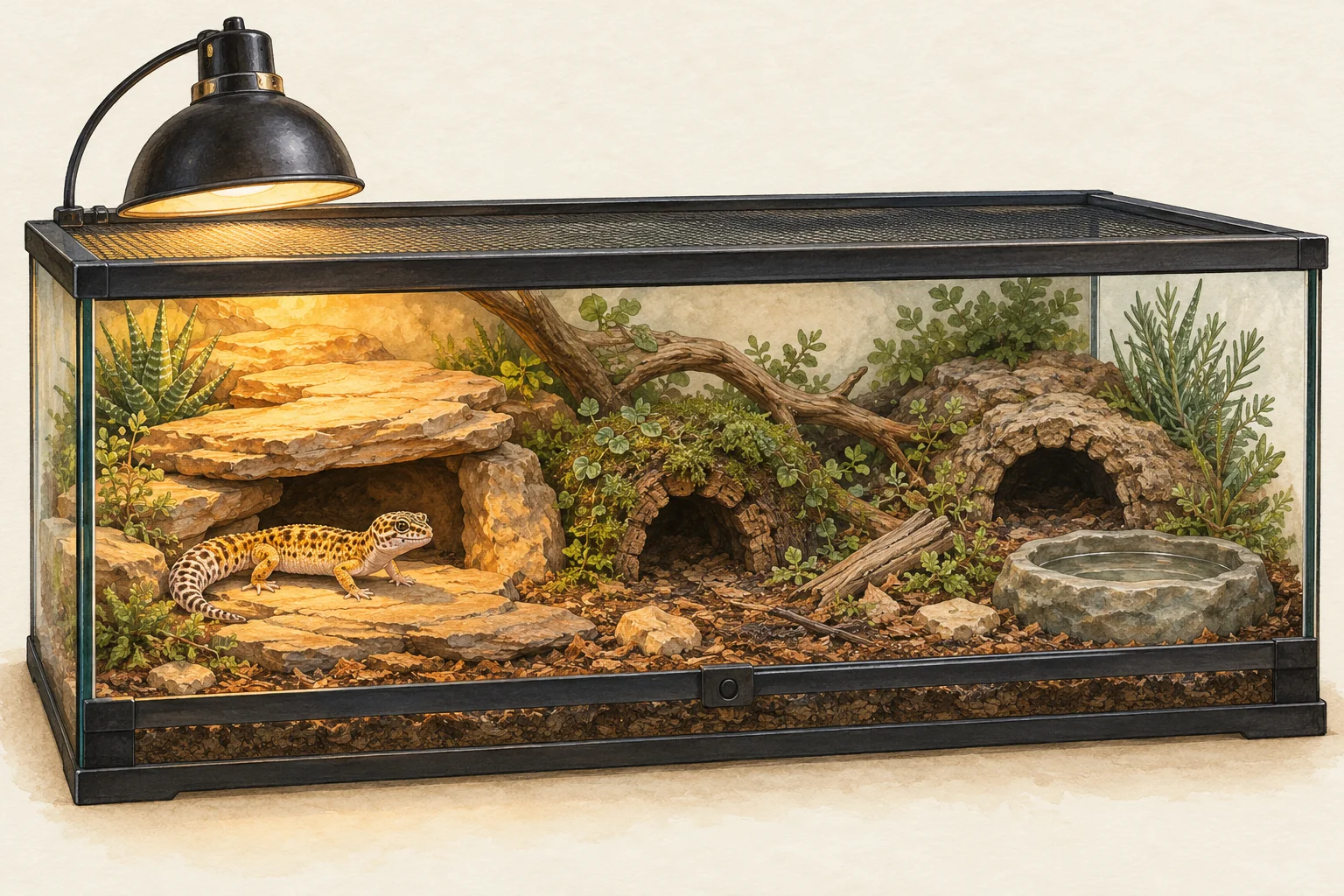
- Give it room to move. PetMD lists too little exercise as a cause of obesity.1 A larger enclosure with climbing spots and live prey to chase helps.
- Ask your vet first. PetMD advises a vet check for any reptile whose weight is in doubt.1
If your gecko is too thin
A thin gecko needs a reason, not just more food. Common causes include:
- Temperatures that are too low, which slow digestion even when the gecko eats well.1
- Parasites. Cryptosporidium typically causes rapid weight loss and failure to grow. Heavy pinworm loads cause weight loss, poor growth and diarrhea.3
- Metabolic bone disease, which can cause chronic wasting and make eating painful.3
- A new home, breeding season or a hidden injury, covered in our guide to a leopard gecko that won’t eat.
A rescue or rehomed gecko may come to you thin. Fix the setup first using our temperature guide and feeding schedule, and book a vet check with a fecal test.5
Common questions
How much should an adult leopard gecko weigh?
We have not found a veterinary source that gives one healthy adult weight, and size varies between lines. Judge by shape, with the tail nearly as wide as the body, and by the trend on your scale.
What are armpit bubbles?
Keepers often point to small bubbles behind the front legs as a sign of overfeeding. We have not found a veterinary source that explains them, so mention them to your vet at the next check rather than treating them as a diagnosis.
Can a pet store tell if my gecko is obese?
A store can spot an obvious case, but a reptile vet is the right person to judge body condition and set a diet plan, especially before you cut food.
How fast should a leopard gecko lose weight?
Slowly. Change the diet in small steps and keep weighing. Fast weight loss, whether planned or not, is a reason to see a vet.
Are some leopard geckos just smaller?
Yes, size varies between geckos and lines. What matters is the trend: a juvenile should keep gaining. Vet Times lists failure to grow among the signs of parasites such as Cryptosporidium, so a juvenile that stops growing should see a vet.
Sources
Numbers in the text link to these sources. We checked each one on the date shown.
- 1Body Condition Score for ReptilesLaurie Hess, DVM, Diplomate ABVP (Avian Practice). PetMD. Checked Oct 29, 2026.
- 2Leopard Geckos: Care and FeedingGregory Rich, DVM. VCA Animal Hospitals. Checked Oct 29, 2026.
- 3Management, care and common conditions of leopard geckosMarie Kubiak. Vet Times. Checked Oct 29, 2026.
- 4Leopard gecko care sheetRSPCA. Checked Oct 29, 2026.
- 5Leopard gecko husbandry and careFilipe Martinho, MRCVS. University of Liverpool Veterinary Practice. Checked Oct 29, 2026.
Update history
- : First published.
- : Re-checked every claim against its sources; corrected wording, numbers and attributions.
HerpWise Editorial · About the author and review process
HerpWise Editorial summarizes published veterinary, welfare and specialist care guidance. The sources and check date are listed on each guide. Veterinary review is credited separately when completed.
Suggest a correction to this guide