Short answer
Metabolic bone disease (MBD) weakens a leopard gecko's bones when it gets too little calcium or vitamin D3, from its supplements or from UVB. Look for a soft or rubbery jaw, bent or swollen legs, trouble lifting its belly off the floor, twitching, lethargy and a poor appetite. A reptile vet confirms it, usually with X-rays. Prevent it by dusting insects with calcium, providing vitamin D3 through UVB or a supplement, and keeping the enclosure warm enough.
What metabolic bone disease is
Metabolic bone disease, or MBD, is the name for a group of nutritional diseases that weaken a reptile’s bones.1 Vets also call it nutritional secondary hyperparathyroidism.4 The RSPCA lists it among the most common problems in captive reptiles.1
What causes it in leopard geckos
Leopard geckos need calcium from their insects, and vitamin D3 to absorb it.
- Too little calcium. VCA advises dusting insects with a phosphorus-free calcium powder and keeping a dish of calcium in the enclosure.6
- Too little vitamin D3. A leopard gecko can make vitamin D3 in its skin under UVB, as a 2020 study confirmed,7 or get it from a supplement. The RSPCA names a lack of UVB as the most common cause of MBD in reptiles.1
- A calcium to phosphorus imbalance in the diet.45
- Too little heat. Vet Times links MBD in leopard geckos to too little calcium, vitamin D3 or heat.2
See our feeding schedule, UVB guide and temperature guide.
Signs to watch for
| Type of sign | What you may see |
|---|---|
| Behavior and appetite | Lethargy, loss of appetite, weight loss, muscle twitching315 |
| Movement | Trouble lifting its chest and belly off the floor, reluctance to move34 |
| Body changes | A soft or rubbery jaw, swollen legs, bent or deformed arms and legs314 |
| Severe signs | Fractures, a bent spine, permanently deformed limbs, jaw, spine or tail14 |
Vet Times adds that geckos with MBD may be unable to eat because the jaw softens and becomes painful, and that the disease can cause chronic wasting.2 Early signs are often subtle.5
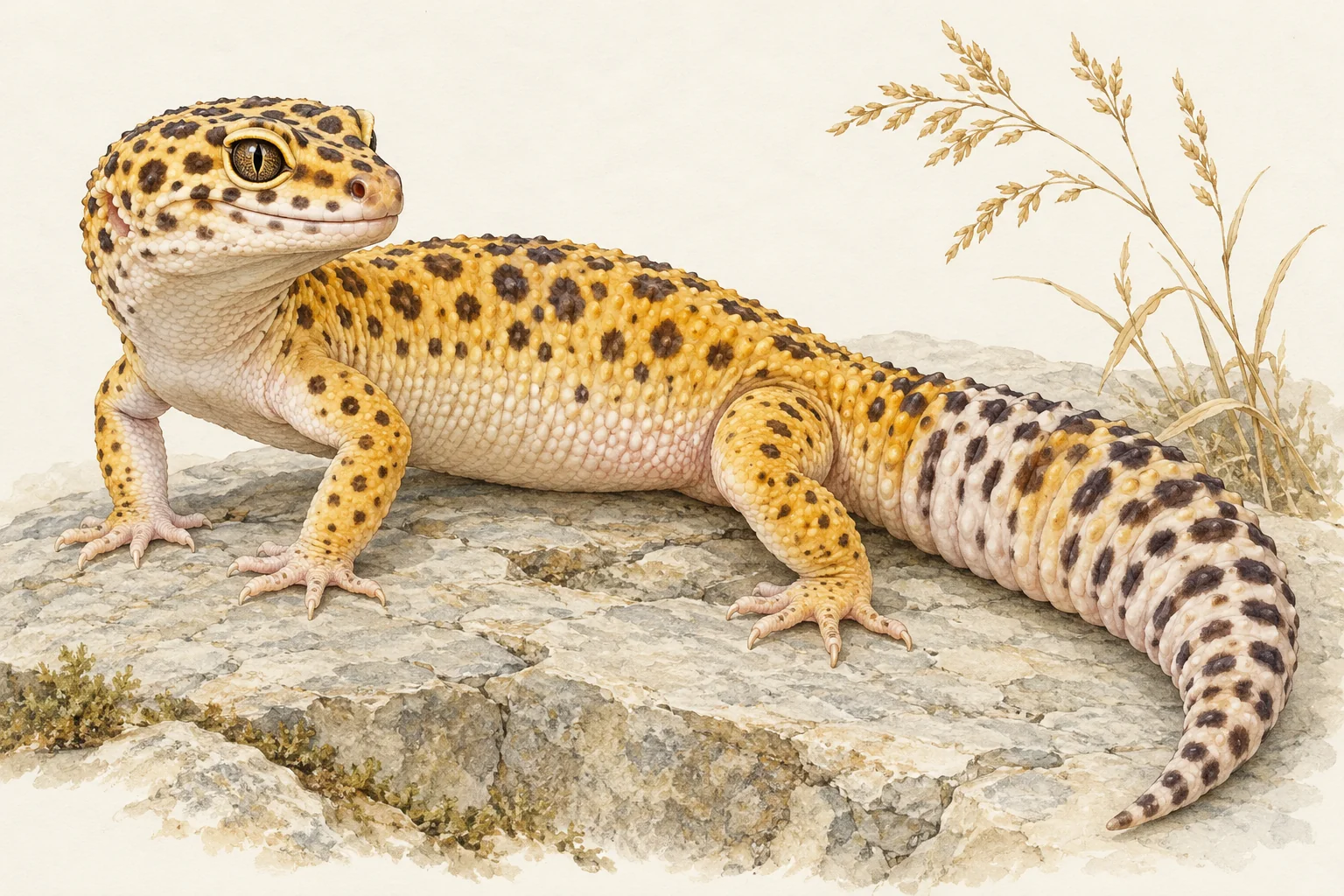
A healthy leopard gecko holds its belly off the floor when it walks.1 A gecko that drags its belly all the time needs a check.
How a vet diagnoses and treats it
A vet will review the diet and setup, examine the gecko and usually take X-rays to confirm the diagnosis and check for fractures. Blood calcium and phosphorus levels can also help.45
Treatment depends on severity and can include:45
- Corrected calcium, vitamin D3, UVB and heat
- Calcium supplements given as the vet directs
- Strict rest in a small, safe space, with very careful handling
- Pain relief for fractures, and sometimes hospital care
Mild cases may resolve with these changes, but treatment can take weeks to months, and severe cases are difficult to manage.5
Where the sources disagree. ReptiFiles says mild cases can usually be treated at home by dusting all insects with a calcium supplement containing vitamin D3, with a vet needed in severe cases or if there is no improvement after a month.3 The vet handouts we cite put the vet first.45 A month is a long time for a gecko with soft bones, so we suggest a vet visit as soon as you see the signs.
ReptiFiles also notes that leopard geckos, unlike many other geckos, lack the calcium sacs some species store calcium in, so you cannot check their reserves that way.3
Prevention
- Dust every insect feeding with a calcium powder, following the label.6
- Provide vitamin D3, either from a low-output UVB lamp or from a supplement that contains it.76
- Keep a dish of plain calcium in the enclosure.6
- Gut-load insects for at least 24 hours before feeding.6
- Keep the warm end warm enough, measured on the floor.2
- Weigh regularly and book a yearly vet check.
Common questions
Do leopard geckos get MBD without UVB?
Not necessarily. Leopard geckos can get vitamin D3 from a supplement instead of UVB. A 2020 study found that juveniles given dietary vitamin D3 grew normally with or without UVB, though the UVB group had higher vitamin D levels. MBD happens when neither route supplies enough.
Can a leopard gecko recover from MBD?
Mild cases can improve once calcium, vitamin D3, UVB and heat are corrected, but treatment can take weeks to months, and severe cases can be difficult to manage and treat. The RSPCA warns that MBD can eventually leave the limbs, jaw, spine or tail permanently deformed, so see a vet early.
Does a dish of calcium powder prevent MBD?
VCA recommends both: dust insects with calcium and keep a shallow dish of calcium powder in the enclosure. Use the dish as well as dusting, not instead of it.
Sources
Numbers in the text link to these sources. We checked each one on the date shown.
- 1How to care for a leopard geckoRSPCA. Checked Oct 29, 2026.
- 2Management, care and common conditions of leopard geckosMarie Kubiak. Vet Times. Checked Oct 29, 2026.
- 3Leopard Gecko Metabolic Bone DiseaseMariah Healey. ReptiFiles. Checked Oct 29, 2026.
- 4Metabolic Bone Disease (MBD) in Reptiles and Amphibians, client handoutLafeberVet. Checked Oct 29, 2026.
- 5Metabolic Bone DiseaseUnusual Pet Vets. Checked Oct 29, 2026.
- 6Leopard Geckos: Care and FeedingGregory Rich, DVM. VCA Animal Hospitals. Checked Oct 29, 2026.
- 7The nocturnal leopard gecko (Eublepharis macularius) uses UVb radiation for vitamin D3 synthesisOonincx, Diehl, Kik, Baines, Heijboer, Hendriks and Bosch. Comparative Biochemistry and Physiology Part B, vol. 250 (2020). Checked Oct 29, 2026.
Update history
- : First published.
- : Re-checked every claim against its sources; corrected wording, numbers and attributions.
HerpWise Editorial · About the author and review process
HerpWise Editorial summarizes published veterinary, welfare and specialist care guidance. The sources and check date are listed on each guide. Veterinary review is credited separately when completed.
Suggest a correction to this guide