Short answer
Vets and specialist keepers disagree about loose substrate. VCA lists paper towel, newspaper, reptile carpet or bark and warns against coarse sand, corncob and walnut shell. ReptiFiles recommends a packed soil, sand and clay mix at least 4 inches deep so the gecko can dig, and blames impaction mainly on poor husbandry. ReptiFiles and the RSPCA warn against calcium sand, and VCA and ReptiFiles both avoid walnut shell. Paper towel or tile is the safe choice for a new, young or sick gecko.
Why answers differ
Substrate is one of the most argued topics among leopard gecko keepers.
The disagreement is about impaction, a gut blockage that can follow swallowing loose material.
- VCA, a veterinary hospital network, says never to use coarse sand, corncob bedding or crushed walnut shell, because they can be swallowed and block the intestines.1 Reptiles Magazine’s vet author lists sand, ground walnut shell and fine gravel as substrates that can cause impaction.3
- ReptiFiles calls the idea that any loose substrate must be avoided “outdated”, and says impaction is almost always caused by poor husbandry, such as an enclosure that is too cold, or by a gecko that is already sick.2
Option 1: a solid floor
| Substrate | Notes |
|---|---|
| Paper towel or newspaper | Listed by VCA.1 ReptiFiles says replace it immediately if wet, and do not use it if your gecko shreds it. Best for quarantine.2 |
| Stone tile | Listed as acceptable by ReptiFiles; no digging.2 |
| Reptile carpet | Listed by VCA.1 ReptiFiles puts it on its avoid list.2 |
Choose a solid floor for a new gecko in quarantine, a juvenile, or any gecko that is unwell.
Option 2: a packed soil mix
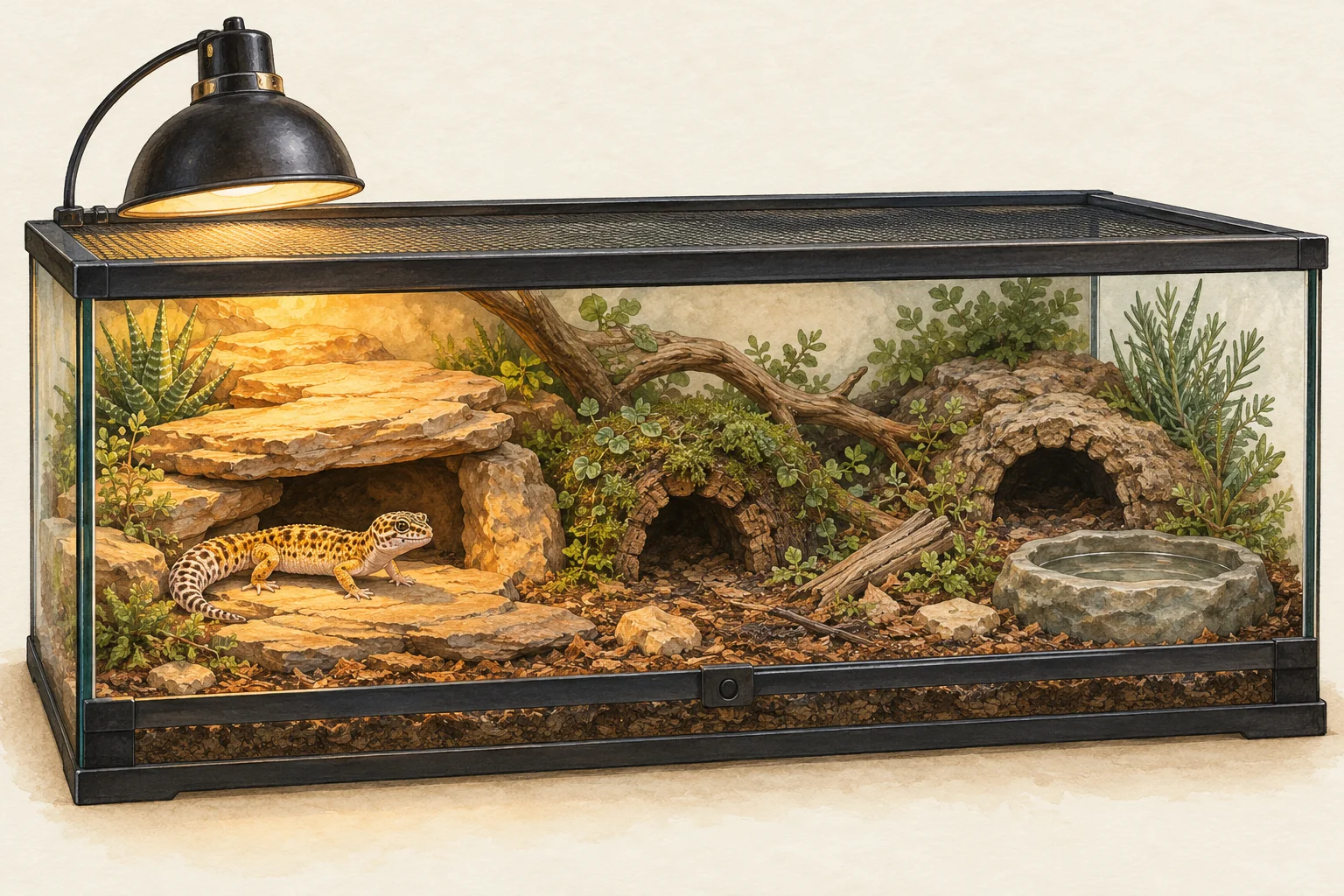
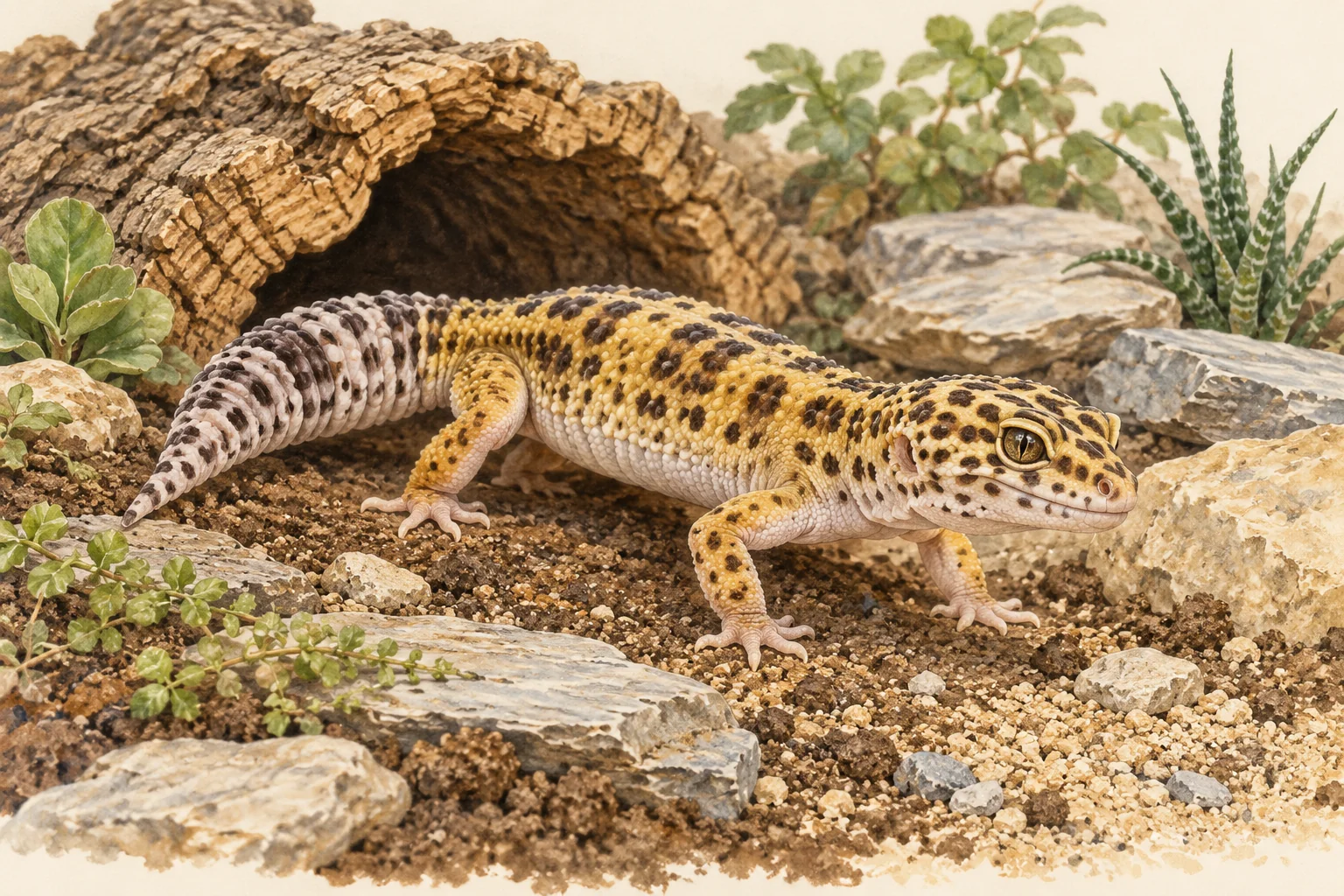
Leopard geckos dig. ReptiFiles recommends a loose substrate deep enough for burrowing:2
- DIY mix by volume: 60% organic topsoil, 30% sand, 10% Excavator Clay or bentonite.
- Depth: at least 4 inches (10 cm).
- Prepare it: moisten, pack firmly, and let it dry completely before the gecko goes in.
- Sand, if used, should be washed and low in dust. Mixing it with soil and clay is better than sand alone.
- Only for healthy geckos that have finished quarantine.
ReptiFiles does not recommend a full bioactive setup for beginners.2 The RSPCA also describes a soil and sand mix for adult leopard geckos, and warns against calcium sand.4
What to avoid
| Substrate | Why |
|---|---|
| Calcium or vitamin sand | Calcium carbonate can neutralize stomach acid and cause digestive problems.2 The RSPCA also warns against it.4 |
| Crushed walnut shell | Blockage risk if swallowed.13 |
| Corncob bedding | Blockage risk if swallowed.1 |
| Dusty sand | Dust can injure and infect the eyes.2 |
| Coconut fiber, mulch, wood chips on their own | Fine as part of a mix, but ReptiFiles advises against them as the only substrate.2 |
Lowering the impaction risk
Whatever the floor, the setup around it matters most.
- Get the heat right. ReptiFiles names a cold enclosure as a main cause of impaction.2 See our temperature guide.
- Feed from a dish, or on a bare patch, so the gecko does not take in substrate with its insects.
- Feed insects no bigger than the gecko’s head.4
- Watch for warning signs after you change substrate: not eating, no droppings, a swollen belly.
Common questions
Is sand safe for leopard geckos?
Sources split. VCA warns against coarse sand, and Reptiles Magazine's vet author lists sand among substrates that can cause impaction if swallowed. ReptiFiles says washed, low-dust sand can be safe for a healthy gecko when mixed with soil and clay and packed down.
Is calcium sand good for leopard geckos?
No. ReptiFiles advises against calcium or vitamin sand because calcium carbonate can neutralize stomach acid and upset digestion.
Is paper towel bad for leopard geckos?
No. ReptiFiles calls it fine for quarantine, though it does not let the gecko dig. Replace it as soon as it gets wet, and stop using it if your gecko shreds it.
Is reptile carpet safe?
VCA lists reptile carpet as a floor covering. ReptiFiles lists it among substrates to avoid. If you use it, keep a spare piece so you can swap in a clean, dry one.
How deep should leopard gecko substrate be?
For a loose mix, ReptiFiles recommends at least 4 inches (10 cm), packed firmly and fully dry before the gecko goes in.
Sources
Numbers in the text link to these sources. We checked each one on the date shown.
- 1Leopard Geckos: Care and FeedingGregory Rich, DVM. VCA Animal Hospitals. Checked Oct 29, 2026.
- 2Leopard Gecko Substrate OptionsReptiFiles. Checked Oct 29, 2026.
- 3Leopard Gecko Lizards Not EatingMargaret A. Wissman, DVM, DABVP. Reptiles Magazine. Checked Oct 29, 2026.
- 4Leopard gecko care sheetRSPCA. Checked Oct 29, 2026.
Update history
- : First published.
- : Re-checked every claim against its sources; corrected wording, numbers and attributions.
HerpWise Editorial · About the author and review process
HerpWise Editorial summarizes published veterinary, welfare and specialist care guidance. The sources and check date are listed on each guide. Veterinary review is credited separately when completed.
Suggest a correction to this guide